Scientific name: Ostrya virginiana
Abundance: uncommon
What: seeds
How: raw, roasted, flour
Where: woods
When: late summer
Nutritional Value: calories
Dangers: none
Identifying Photos
Distribution
North American distribution, attributed to U. S. Department of Agriculture.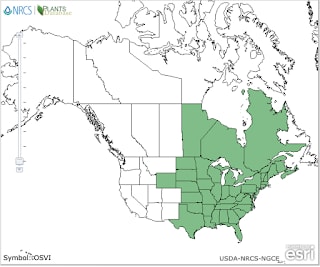
Texas distribution, attributed to U. S. Department of Agriculture. The marked counties are guidelines only. Plants may appear in other counties, especially if used in landscaping.
Passing through the Texas woods your eye may well be captured by the smooth, strong looking trunk of a hop hornbeam tree. Due to its appearance it has two other common names, musclewood and ironwood. It prefers full shade and stays small so that bigger trees block the sun from it. Don't let its relatively small size fool you, though. Its wood is extremely hard and durable. Chopping one down is very hard work!
It's unusual seedhead clusters look very much like those of the beer-necessity hop vine. The leaves resemble elms but without the distinctive, directional hairs of the Ulmus (elm) species. The trunk, as mentioned before is smooth with flowing waves that look like muscles under the gray bark.
The seeds, though small, are plentiful and easy to collect. This made them an important food source for Native Americans. While the seeds have been used to make beer, they act as a source of grains/starch rather than the bitter hops. They have a mild, nutty flavor raw. Roasting them a bit makes them taste even better. Both the raw and roasted seeds can be boiled into a porridge or ground into a gluten-free flour. From there let your imagination run wild!