Scientific name: Ulmus ruba
Abundance: rare
What: leaves, young fruit, inner bark
How: leaves raw or cooked; young seeds roasted or boiled; inner bark dried then ground to flour or used in tea
Where: woods, waste areas, slight shade
When: leaves in spring, inner bark in spring
Medicinal Summary
Inner Bark – demulcent; soothes skin and gastrointestinal inflammations; cough suppressant (poultice, tisane)
Identifying Photos
Slippery elm tree.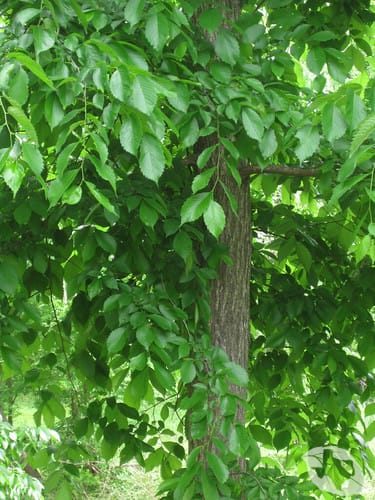
Another slippery elm tree.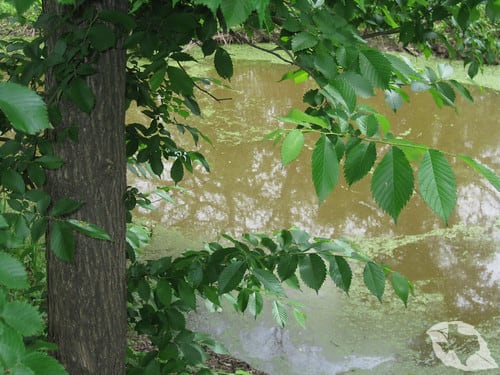
Toothy, jagged, asymetrical slippery elm leaves.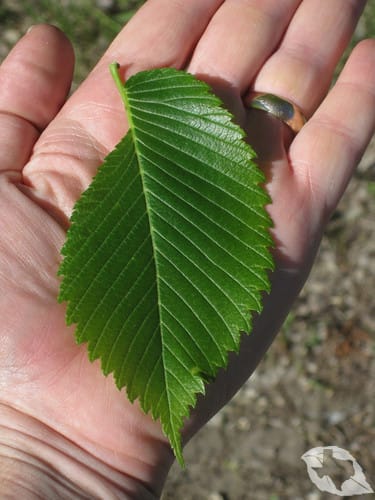
Distribution
North American distribution, attributed to U. S. Department of Agriculture.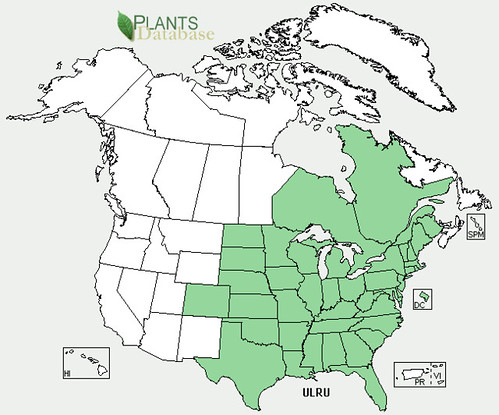
Texas distribution, attributed to U. S. Department of Agriculture. The marked counties are guidelines only. Plants may appear in other counties, especially if used in landscaping.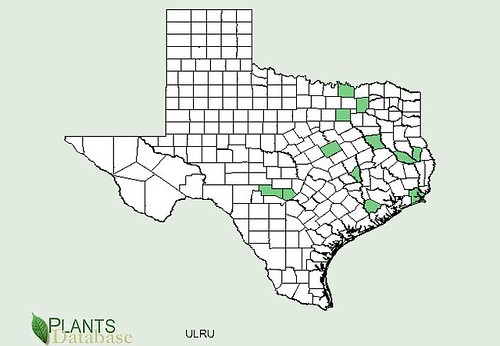
The trunks of Slippery Elms (Ulmus ruba) rarely fork until they are twenty feet tall, unlike it's similar cousin the American Elm (Ulmus americana) which forks at as little as five feet tall. The Slippery Elm can also easily be identified by removing a small bit of bark from the tip of a branch. If it feels slippery/slimey you have the right tree. The inner bark of slippery elm trees is a highly regarded herbal medicine. The slimey inner bark is dried then ground into a powder that, when made into tea, has a soothing effect on any part of the body it touches, both internally and externally. The dried powder can also be used as a flour substitute.
Please only harvest the inner bark in an emergency. Slippery elms are under attack by bark-poachers who are stripping the trees to sell the bark illegally. If you must harvest the bark, take it from trees that are ten or more years old and only remove a thin vertical strip covering less than 10% of the tree's circumference. Taking more than this will kill the tree.
The seeds appear in the spring and look like little fried eggs to me. They have a small, flat, circular seed encased in a flat, papery, circular pod. Collect the whole pod then roast them. This will make the outer pod crisp and easy to remove by grinding the pods between your hands and winnowing the useless chaff from the nutritious seeds. Once collected, the seeds can be ground into a flour or boiled like a porridge.