Scientific name: Lycium berlandieri
Abundance: uncommon
What: fruit
How: raw, cooked
Where: sunny, coastal areas, deserts
When: winter, spring
Nutritional Value: Vitamins A, C, E, flavanoids, and essential fatty acids
Identifying Photos
Woodberry with ripe berries. Picture curtesy of Colleen M. Simpson – Oso Bay Wetlands Preserve & Learning Center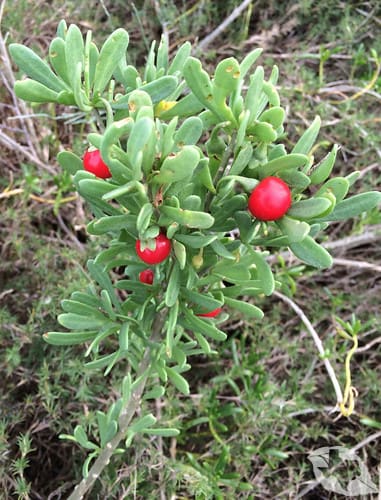
Close-up of berries and leaves. Picture curtesy of Colleen M. Simpson – Oso Bay Wetlands Preserve & Learning Center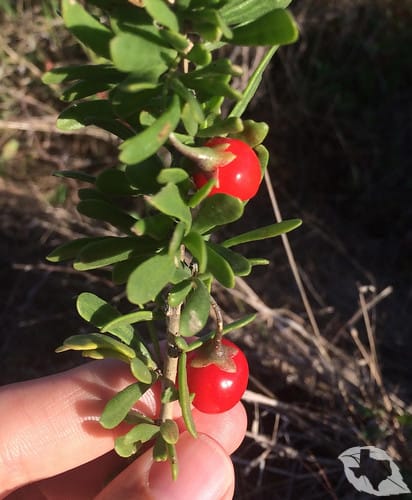
Picture curtesy of Colleen M. Simpson – Oso Bay Wetlands Preserve & Learning Center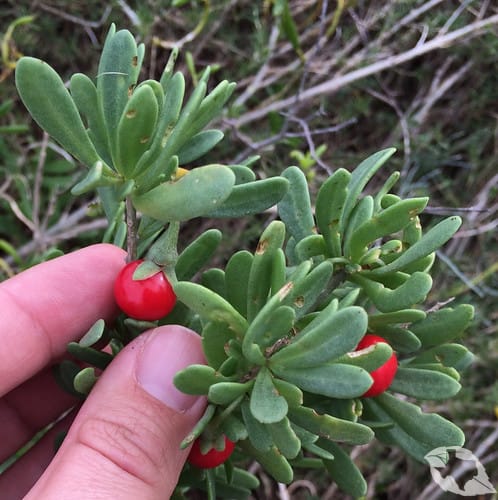
Distribution
North American distribution, attributed to U. S. Department of Agriculture.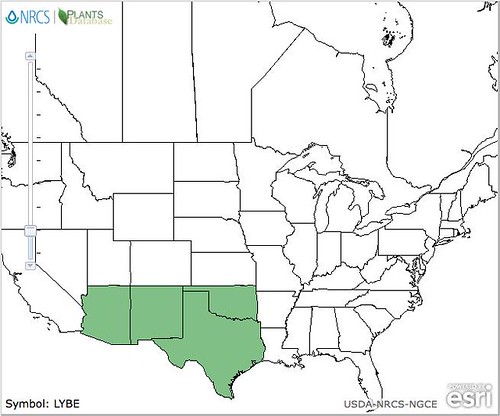
Texas distribution, attributed to U. S. Department of Agriculture. The marked counties are guidelines only. Plants may appear in other counties, especially if used in landscaping.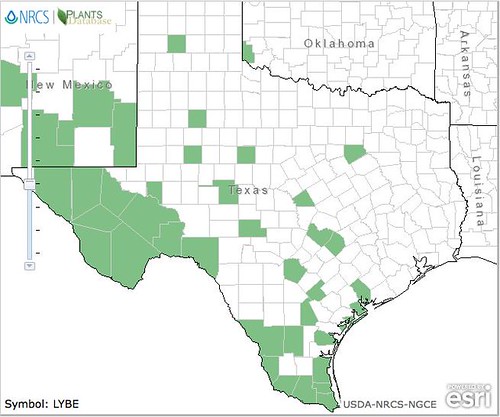
As you cross the dry, sandy, alkaline soils of south and west Texas and southern coastal areas you make see a gray-colored bush covered in thick, elongated oval leaves. Depending on the time of year, the bush may be covered in long, tubular, white-yellowish-green-ish flowers or if you are lucky, marble-sized, red fruit. It's bark is smooth and gray though lighter than the green-gray of its leaves. You've found a Wolfberry bush and that means you have some great, super-nutritious food!
The berries ripen in mid-winter to early spring. They have a tangy taste as they are related to tomatoes…and so are in the nightshade family. Related to the fad-food Gogi berries, this Texas plant has all the same high vitamin content as well as other beneficial chemical compounds. Usually the berries are dried/dehydrated then nibbled as a healthy snack. They can be added to muffins, and breads. People also use them in smoothies! of course, you can also make infused vodka out of them for a nutritional martini. The Recent studies have shown they might help stroke victims.