Scientific name: Alisma plantago
Abundance: uncommon
What: rootstock, young leaves
How: boiled, roasted
Where: sunny water
When: roots – winter, spring, early summer
Other uses: carbohydrates
Dangers: Must be cooked to be edible otherwise it is too bitter and somewhat toxic.
Identifying Photos
Water plantain in pond.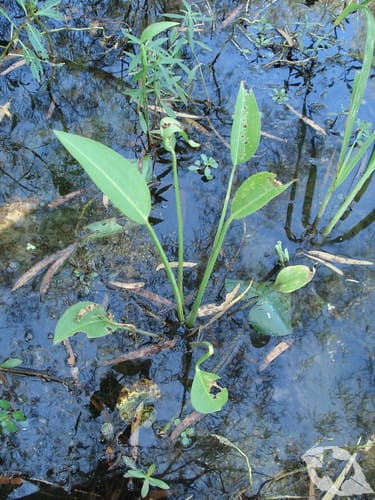
Water plantain along edge of stream.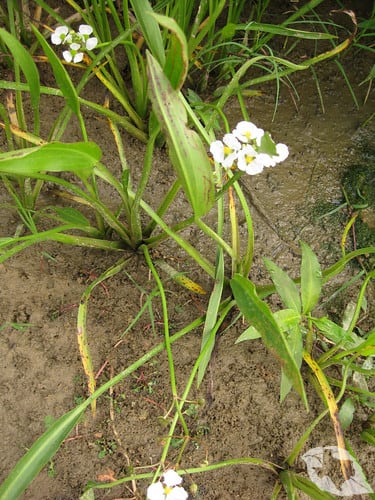
Water plantain flowers.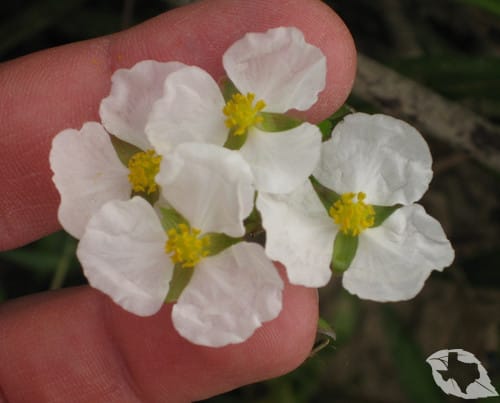
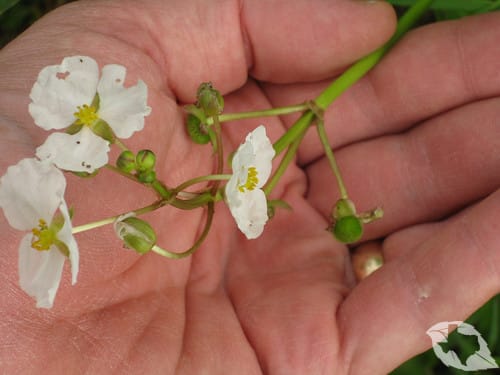
Distribution
North American distribution, attributed to U. S. Department of Agriculture.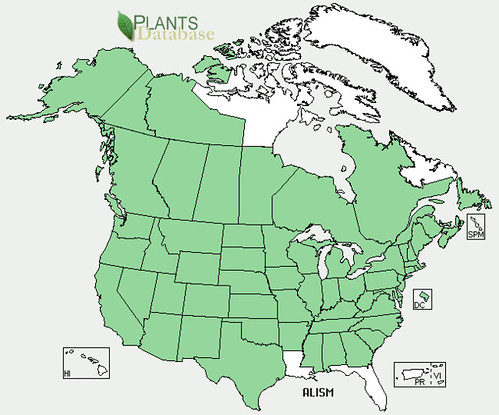
Texas distribution, attributed to U. S. Department of Agriculture. The marked counties are guidelines only. Plants may appear in other counties, especially if used in landscaping.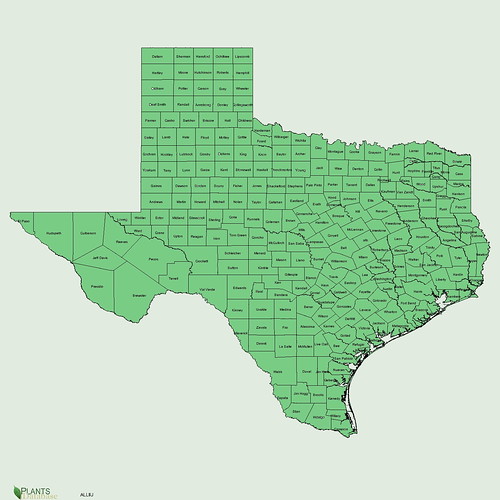
Quickly appearing in just about any shallow water, from streams and lakes to roadside ditches, the somewhat spearhead-shaped, palmately-veined leaves of Water Plantains are easy to spot. The white, three petaled flowers on a stalk add a certain beauty, in my eyes. They are very common across Easy, Central, and the Gulf Coast regions of Texas but more rare in the drier West Texas lands.
The thicker roots contain starch which becomes edible/digestible after boiling or roasting. They are quite bitter so often boiling THEN roasting is the recommended way of preparing them.