Scientific name: Poncirus trifoliat
Abundance: plentiful
What: Mature fruit
How: juice and zest as seasoning and as a lemonade replacement
Where: partially shady woods
When: late fall
Nutritional Value: Vitamin C
Other uses: The the twisted and intertwined branches covered in sharp 2″ long spines make this a great security hedge. This tree is used as a root-stock for grafting other citrus fruits.
Identifying Photos
Unripe trifoliate oranges.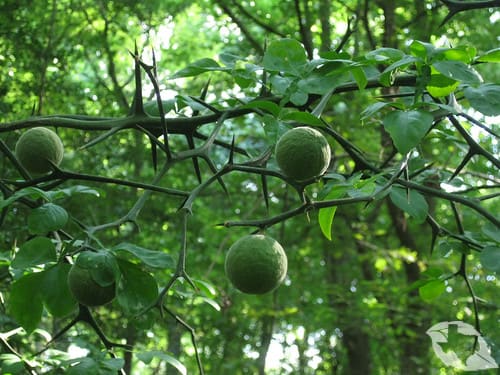
Full-sized, though not yet ripe fruit.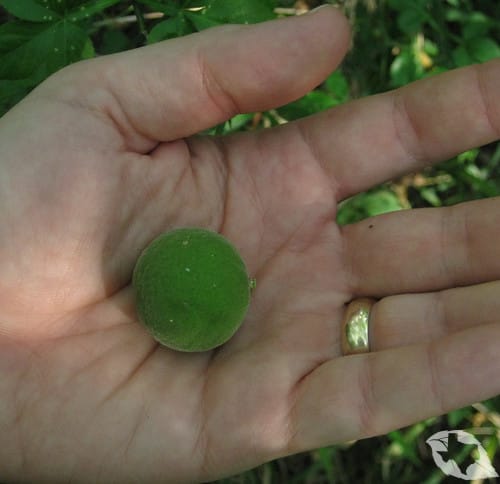
Ripe fruit (December, near Houston).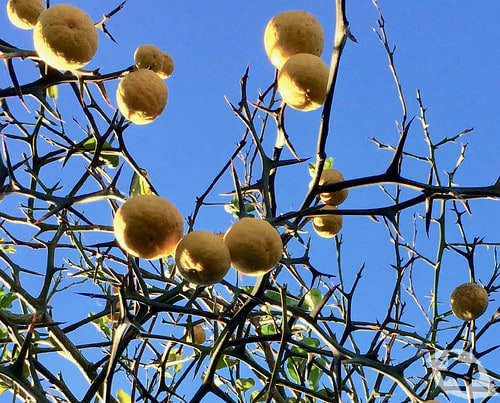
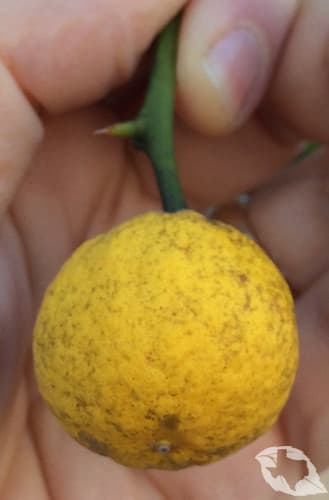
Ripe fruit cut in half. Note all the seeds and lack of flesh.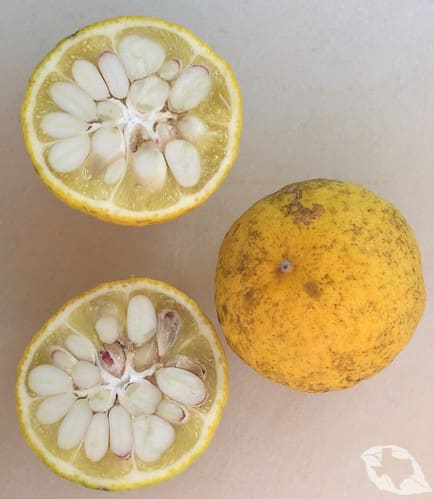
Close-up of flowers.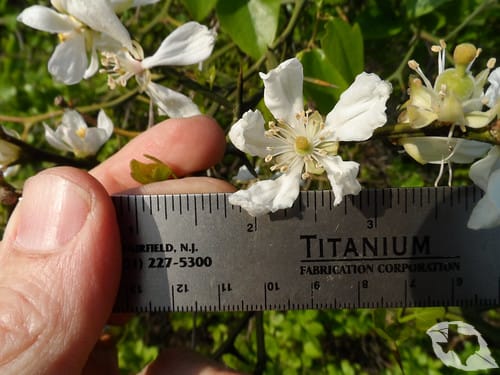
Trifolate orange leaves. Note the three (tri) leaves (foliate) on each stem.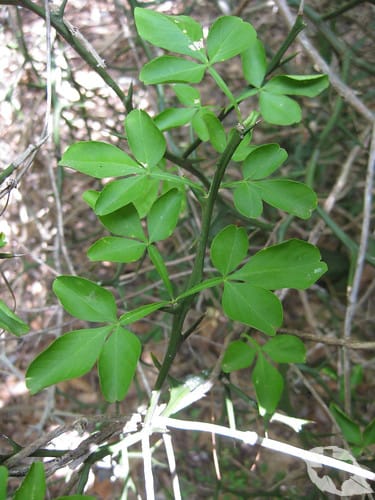
Distribution
North American distribution, attributed to U. S. Department of Agriculture.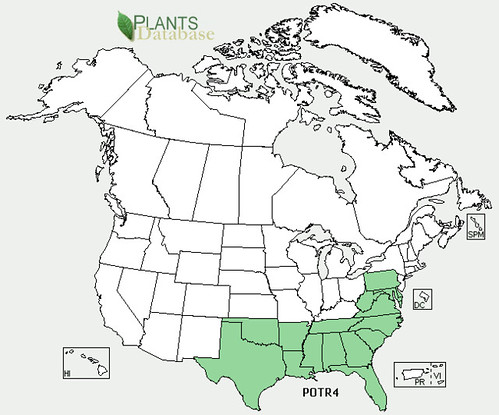
Texas distribution, attributed to U. S. Department of Agriculture. The marked counties are guidelines only. Plants may appear in other counties, especially if used in landscaping.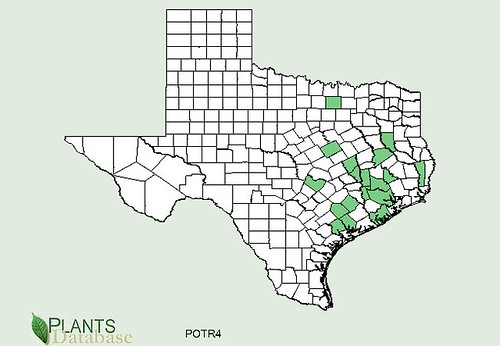
These thorny trees look out of place in Texas and rightly so since they aren't native. However, their root stock is resistant to many common citrus diseases and so most citrus fruit sold in Texas is actually grafted on to this rootstock. Sometimes the rootstock will grow a “sucker” that eventually gets large enough to produce the original, bitter, tiny oranges of this species. The seeds are easily germinated, resulting in this tree spreading through Texas woods. It loses its leaves in the fall resulting in a deep green, thorny beast covered in small, yellow-orange fruit.
The golf ball sized fruit of this tree ripens in the fall about the time the tree loses its leaves. This fruit is extremely sour so only a little bit is needed for flavoring. There is no edible flesh inside the fruit, just a large number of seeds. For maximum amount of juice, let it sit for two weeks after picking before squeezing.The skin can be used to make a zest for cooking and cocktail garnish.