Scientific name: Silybum marianum
Abundance: uncommon
What: roots, leaves, young flowers, seeds
How: roots raw or cooked; young leaves raw or steamed after removing spines; flowers are steamed; seeds roasted or pressed for oil.
Where: sunny fields
When: spring, summer
Nutritional Value: Vit. C, calories
Dangers: Spines must be removed before cooking or eating. Some people may be allergic to milk thistles, especially those allergic to artichokes.
Medicinal Summary
Flowers/Leaves/Stem/Seeds* – protects and heals liver (raw, tisane)
*greats medicinal property found in the seeds
Identifying Photos
Milk thistle.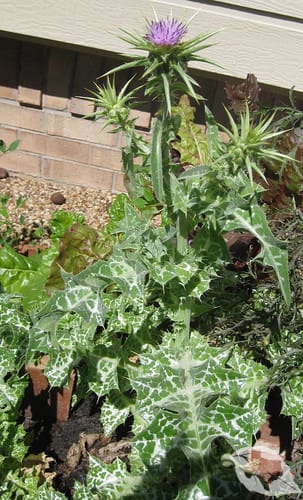
Milk thistle seedling.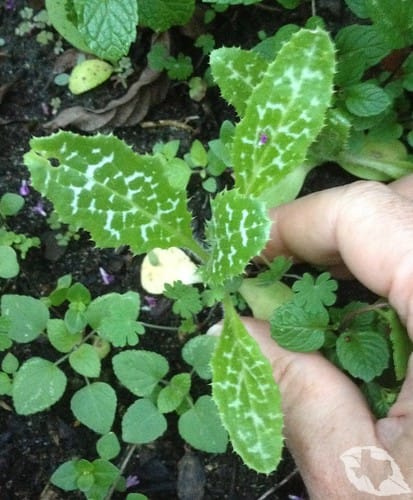
Slightly older milk thistle.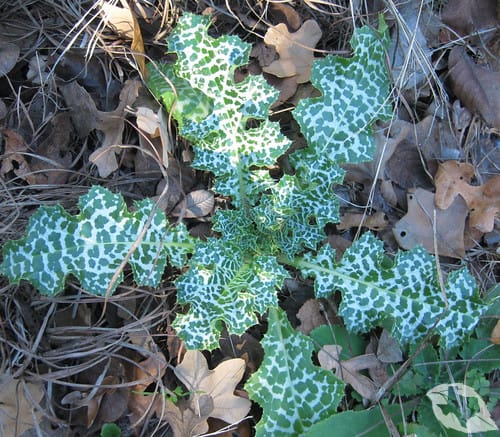
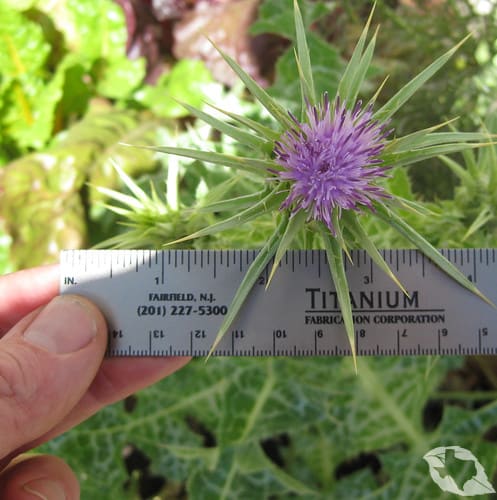
Close-ups of a milk thistle flower.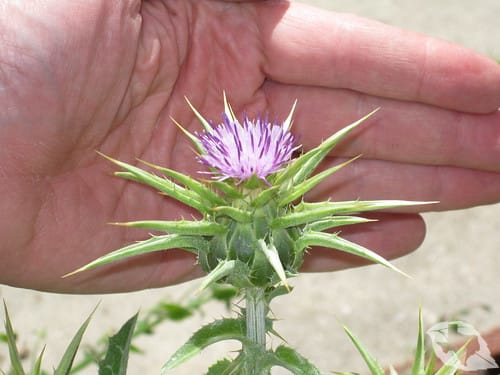
Milk thistle seed, which science has found to be a powerful source of liver-detoxification compounds.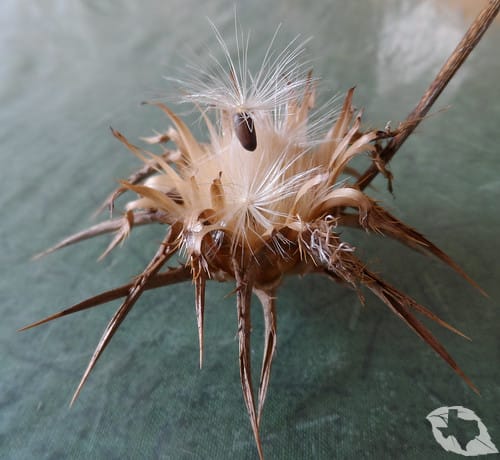
Distribution
North American distribution, attributed to U. S. Department of Agriculture.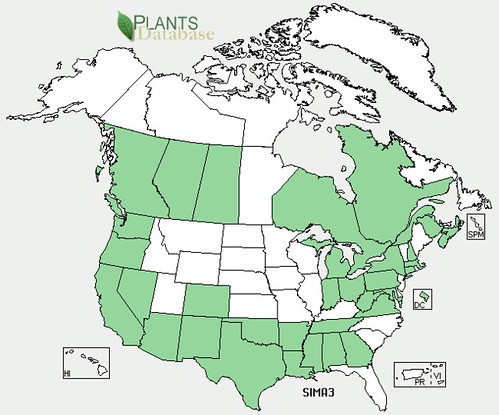
Texas distribution, attributed to U. S. Department of Agriculture. The marked counties are guidelines only. Plants may appear in other counties, especially if used in landscaping.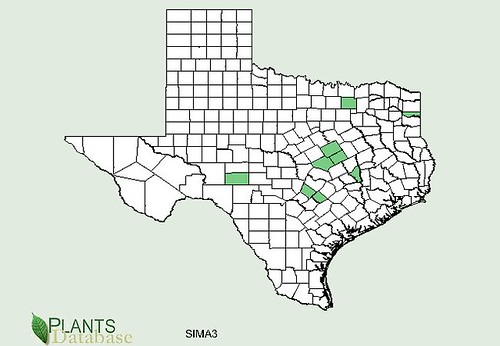
Milk thistles are easy to identify by their height (upwards of 6' tall), beautiful purple flowers, and white veins on blue-green leaves. Start looking for it in open fields in mid-February though depending on the weather they can be found into early summer.
The stem is tasty when peeled and then eaten raw, but try to get it before the flowers have opened. The leaf center “rib” is also tasty after the rest of the leaf (and prickers) are stripped away. The roots can be roasted for a coffee substitute.
They have a long history of medicinal use, especially for treatment of the liver. A tea made from all parts of the plant is the usual method of treating the liver though the seeds have the most effect according to recent research. Link to medicinal usage.
Mimics
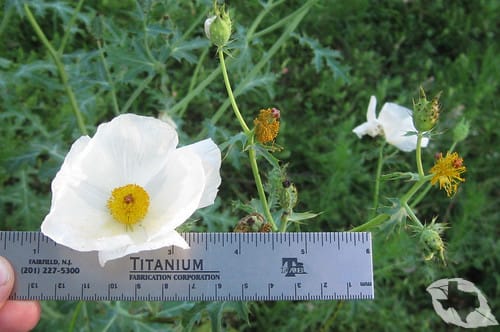
Beware mistaking White Prickly Poppy (Argemone albiflora) for milk thistle. Prickly poppy leaves are much narrower (less than 1″ wide in lobed portions) and significantly less “milky” in the veins. If unsure, let the plant form flowers, which are white with yellow centers on prickly poppy.
Prickly Poppy leaf.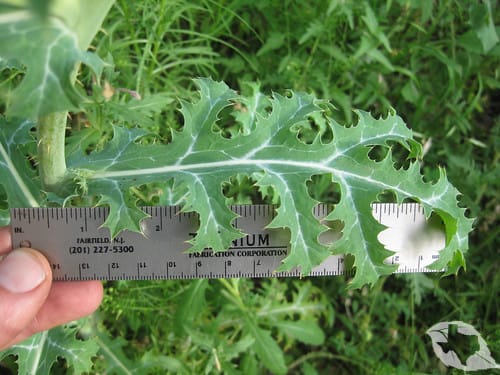
Prickly poppy flower.