Scientific name: Rhus lanceolata, Rhus glabra, Rhus copallinum
Abundance: uncommon
What: red berries
How: lemonade, tea, seasoning
Where: fields
When: early summer
Nutritional Value: minor traces of vitamins and antioxidants
Dangers: white sumac berries are very toxic
Identifying Photos
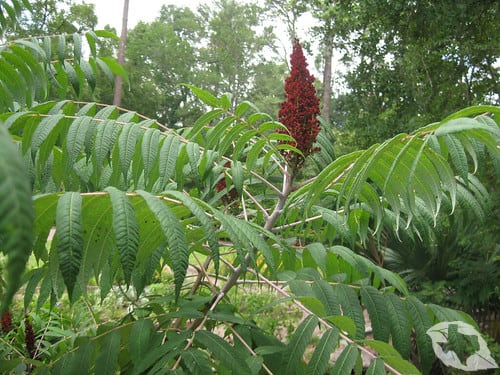
Sumac shrubs.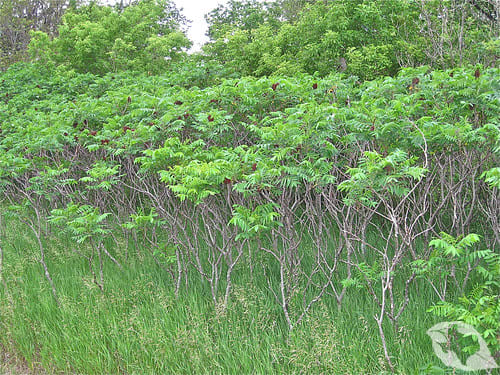
Closer look at sumac shrubs.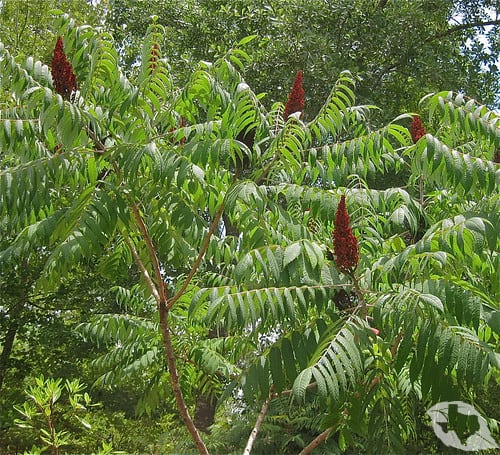
Ripe sumac (Rhus glabra) berries.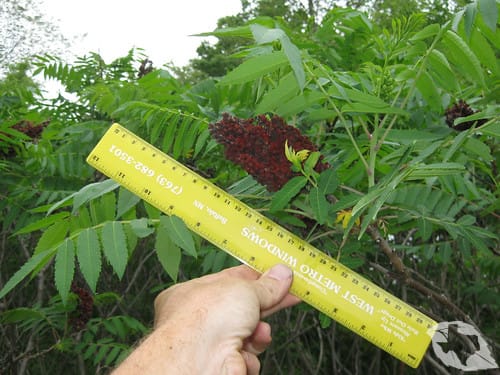
Close-up of sumac berries.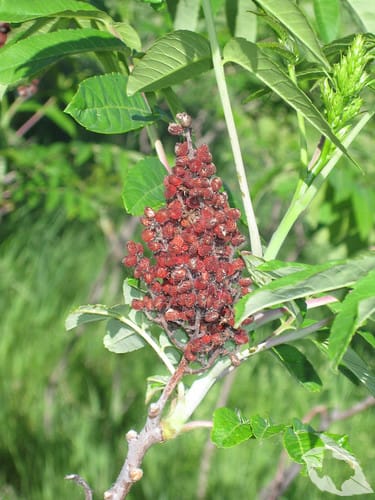
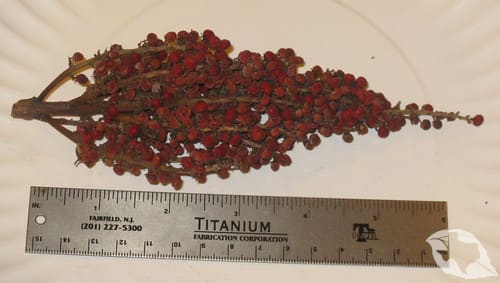
Another view of sumac berries. The white/gray coating is responsible for the tangy flavor.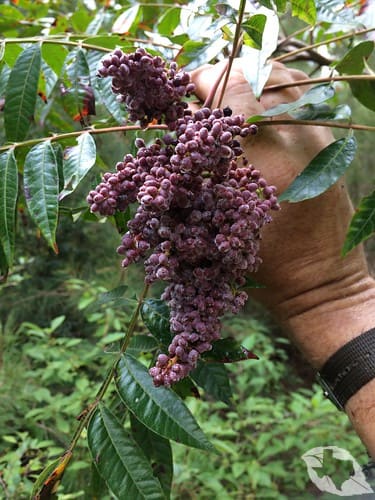
Topside of Winged Sumac (Rhus copallinum) leaf.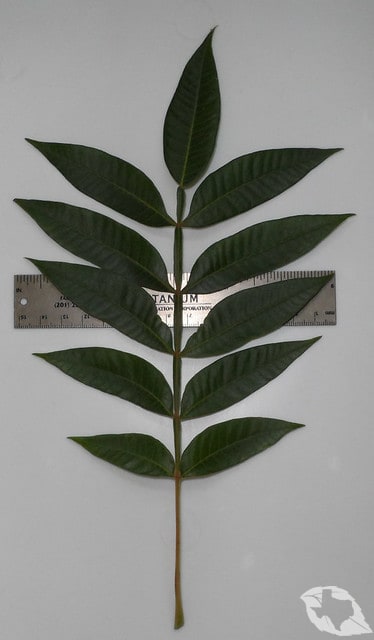
Underside of Winged Sumac (Rhus copallinum) leaf.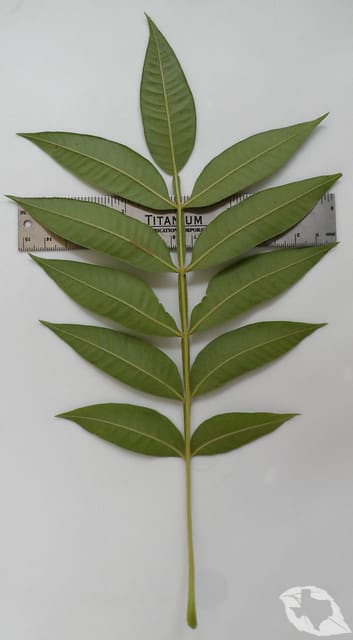
Close-up of winged sumac leaf. Note the “wings” along either side of the main leaf stem.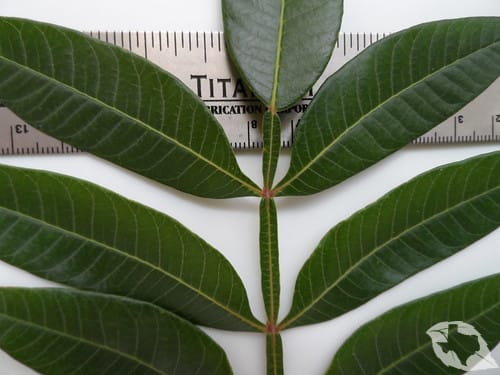
Young sumac flowers which will eventually turn into berries.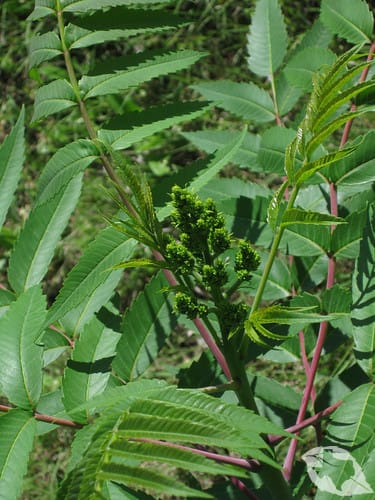
Sumac in the fall (Rhus glabra or Rhus lanceolata).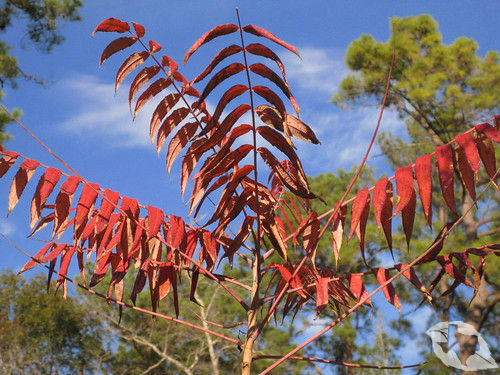
Distribution
North American distribution, attributed to U. S. Department of Agriculture.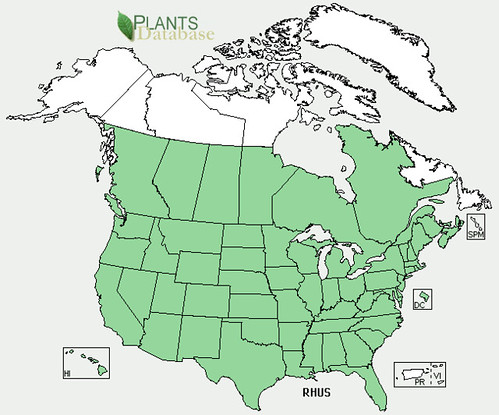
Texas distribution, attributed to U. S. Department of Agriculture. The marked counties are guidelines only. Plants may appear in other counties, especially if used in landscaping.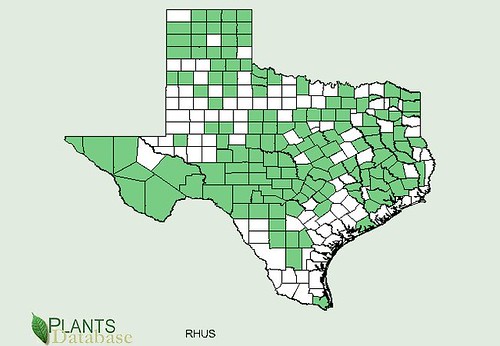
I wish I had a dime for every person who thought sumac (assorted members of the Rhus genus) and poison sumac (Toxicodendron vernix) were the same plant. Or better yet, I'd like to go back in time have a long talk with the guy who decided to call T. vernix “poison sumac”. As you may have guessed by now the two are very different plants and the edible sumac doesn't contain the urishiol oil that causes painful poison ivy/sumac/oak rashes.
Often forming beautiful stands along roads, in fields, and at the edges of woods, these small trees rarely grow more than 7-8 feet tall. They are a very “open” tree with single, narrow trunks that don't branch out until close to the top, giving them an elegant appearance in my opinion. The trunks are gray and pockmarked while the branches become reddish and fuzzy near the leaves. The crushed leaves have a very distinctive odor…of sumac.
The dried berries are a traditional Middle Eastern seasoning used primarily on chicken and fish. Place the dried berries in a peppermill and then grind them over the food either before or after cooking, giving it a tangy, desert flair.
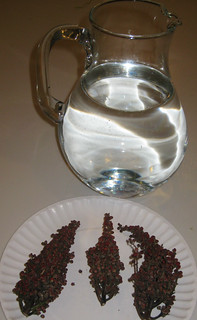
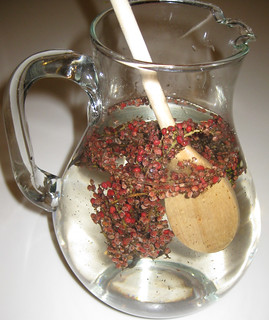
A pleasing “pink sumacade” is made by soaking the berries in cold water for at least ten minutes though overnight in the fridge maximizes the flavor, then filtering the liquid to remove berries and fine sumac hairs before drinking.
Making two quarts of sumac-ade.