Scientific name: Hypericum hypericoides
Abundance: common
What: roots, leaves
How: root tea, poultice; leaf tea, poultice
Where: disturbed areas, fields
When: summer, fall
Nutritional Value: medicinal
Identifying Photos
Distribution
North American distribution, attributed to U. S. Department of Agriculture.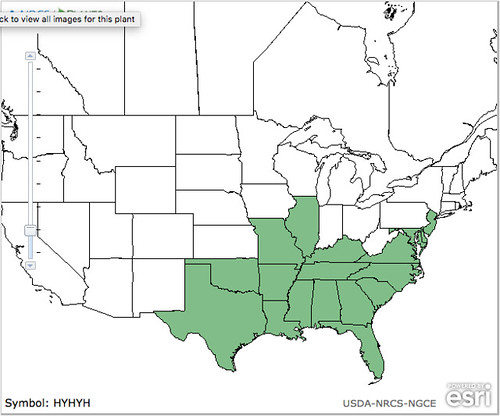
Texas distribution, attributed to U. S. Department of Agriculture. The marked counties are guidelines only. Plants may appear in other counties, especially if used in landscaping.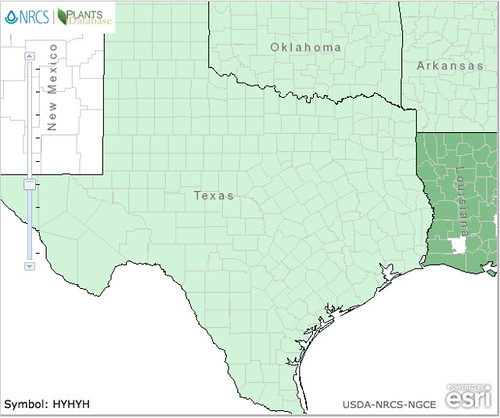
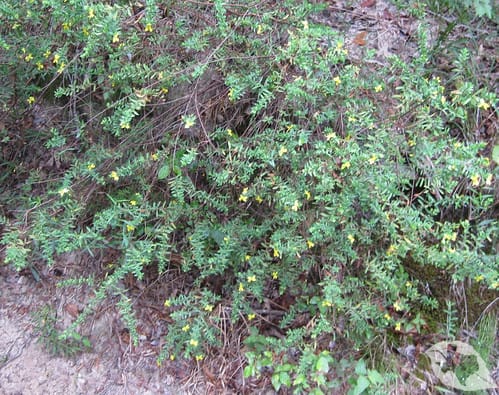
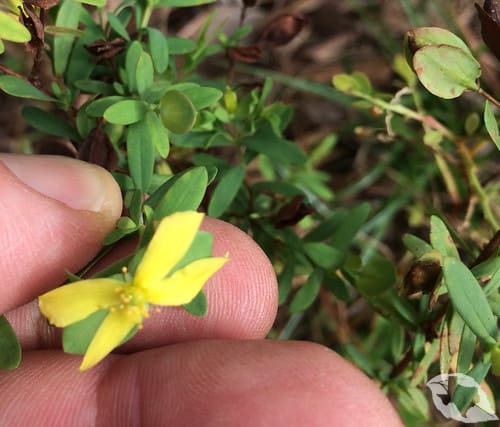
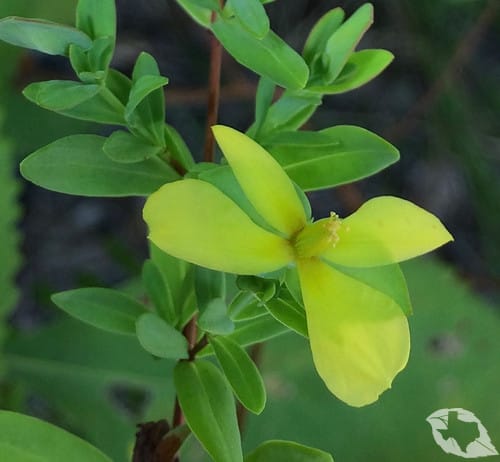
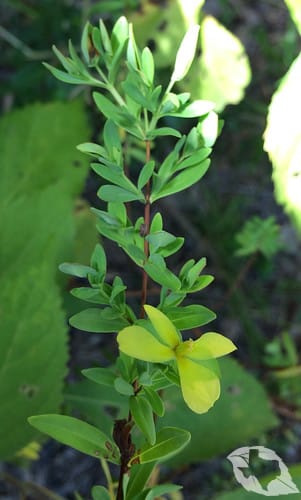
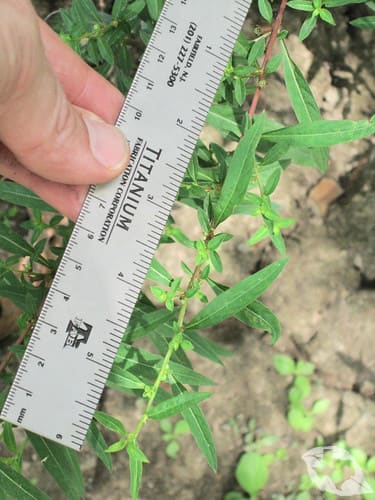
By mid-summer the four-petaled, yellow flowers of St. Andrew's Cross can be found all across the disturbed, partially shaded areas of Texas. This plant is tough but doesn't like full sun, preferring the shade of a wood's edge. It grows from a tiny seedling to over waist-high in just a few months. Its 1″ long, dark green leaves alternate along the stems and branches. There's often a short branch growing up off the stem from the base of a leaf. The long stems droop and end up hanging downwards by late summer.
Although St. Andrew's Cross is a close relative of St. John's Wort, it doesn't have the scientifically proven medicinal benefits of its more famous cousin. Traditionally, assorted Native American tribes used the plant medicinally to sooth certain inflammations. Tea from the root has some painkiller properties as well as soothing colicky babies. Its astringent nature was also used to treat diarrhea and issues with the kidneys and bladder. As a poultice, it was used to treat chapped skin. The leaves of St. Andrew's Cross are also astringent and used to make skin soothing poultices and tea with the same urinary tract treatment as the root.