Scientific name: Polygonum persicaria, Polygonum hydropiper, Polygonum spp.
Abundance: common
What: young leaves, seeds
How: raw, boiled, or steamed
Where: along shores; in still, shallow water; or other moist areas; sunny or shaded
When: spring, summer, fall
Nutritional Value: antioxidants
Dangers: Thoroughly wash or cook this plant to kill any dangerous aquatic microbes
Medicinal Summary
Leaves – capsicum antifungal; increases blood circulation, soothes muscle and nerve pain (tincture, infused vinegar, liniment, salve)
Identifying Photos
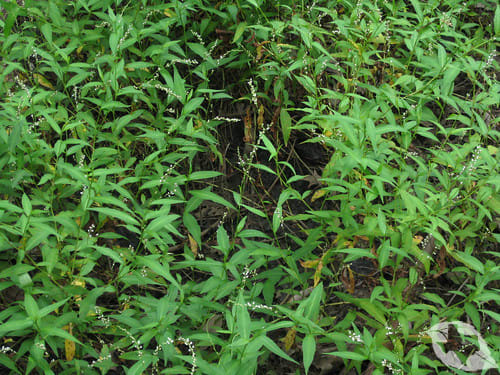
Smartweed thickets
The leaves of smartweeds alternate and the base of the leaves wrap around the stem.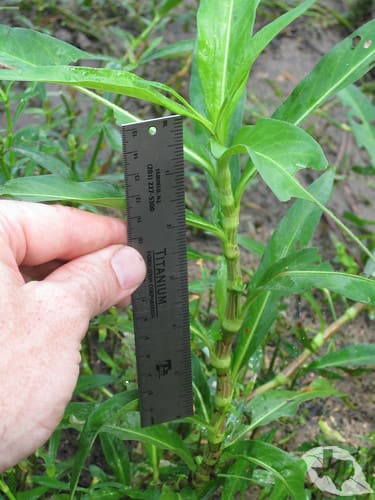
Another type of smartweed with white flowers.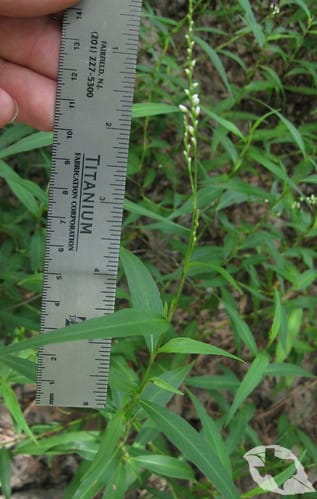
Close-up of smartweed flower stalk.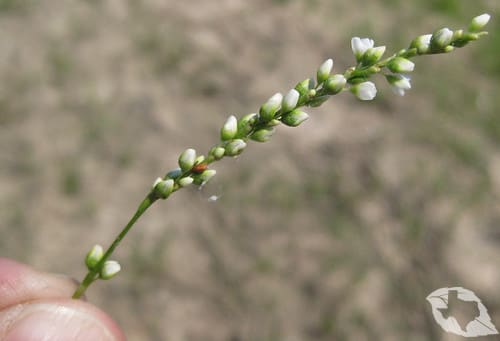
Distribution
North American distribution, attributed to U. S. Department of Agriculture.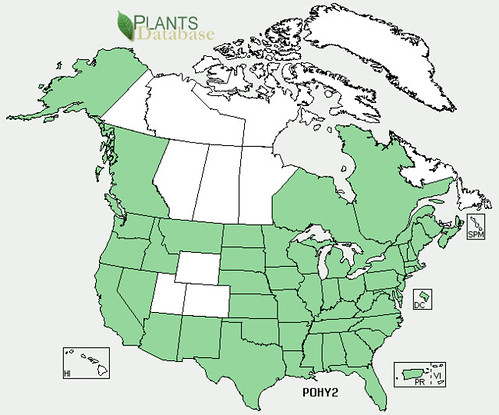
Texas distribution, attributed to U. S. Department of Agriculture. The marked counties are guidelines only. Plants may appear in other counties, especially if used in landscaping.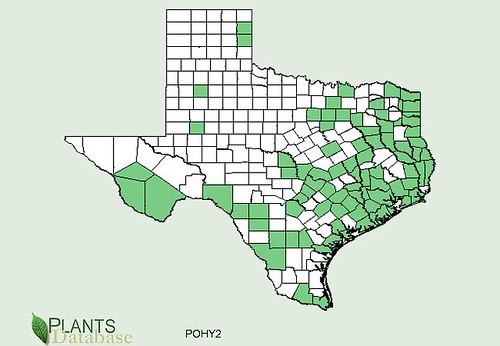
Found in thick clusters along river, stream, ponds and other moist areas, Smart weeds are a common sight throughout spring, summer, and fall. There unique flower stalks with tiny white flowers make them easy to spot even from a distance. They are related to Lady's Thumb (Polygonum persicaria) which is found in similar setting but has pink flowers.
Smartweeds are have a very hot peppery flavor and it only takes a few to spice up a dish. However, the flavor isn't released immediately but shows up after a little chewing. The flavor doesn't withstand cooking very well and is better used as a seasoning added just before eating.