Scientific name: Carya ovata
Abundance: uncommon
What: nuts
How: raw, roasted
Where: Woods, Landscaping
When: fall
Nutritional Value: Vitamin A,E,K,B6; fats, minerals
Other uses: Wood is great for tool handles
Identifying Photos
Hickory nuts.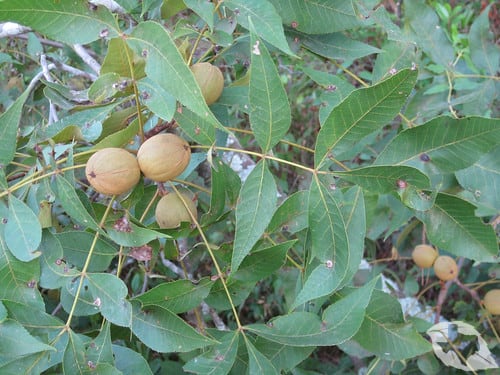
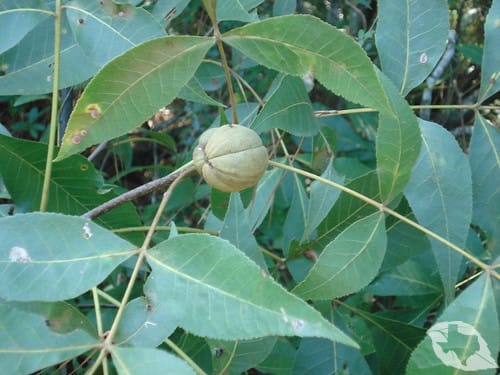
Shagbark hickory (Carya ovata) tree.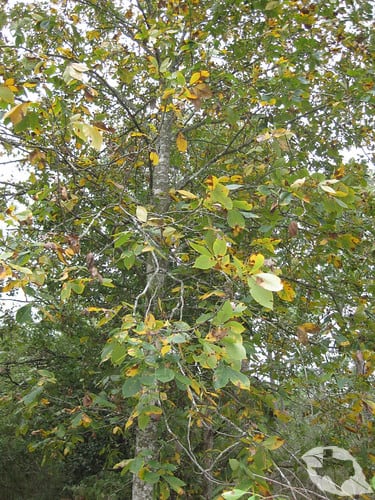
Shagbark hickory (Carya ovata) tree bark.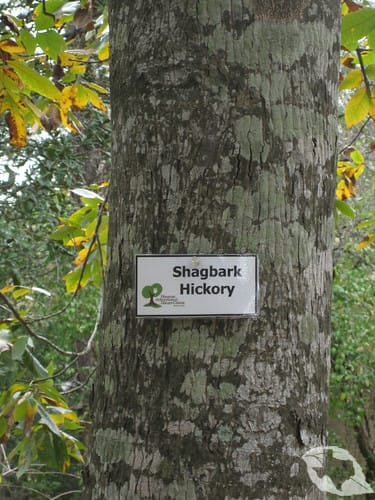
Top of Shagbark Hickory leaf.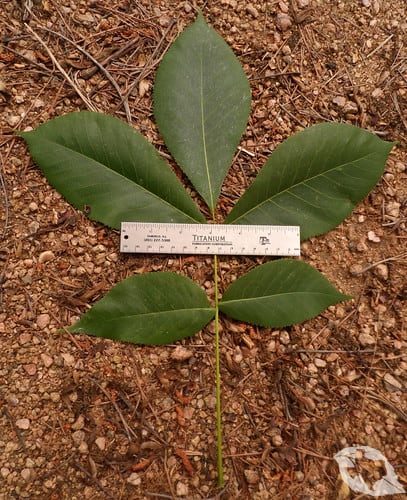
Bottom of Shagbark Hickory leaf.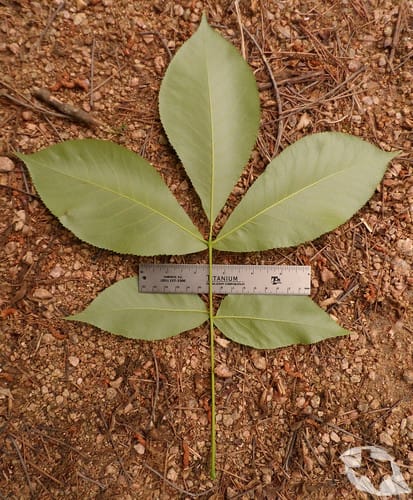
Flowers of Shagbark Hickory (taken March in Houston, TX).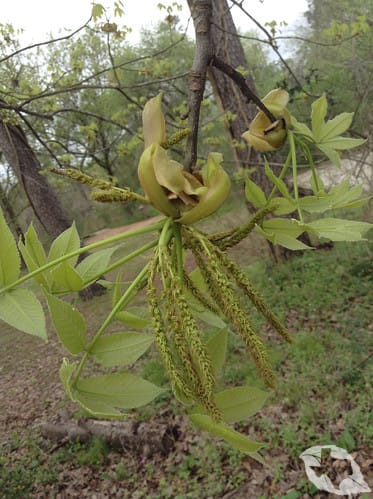
Water hickory (Carya aquatica) nuts are too bitter to eat.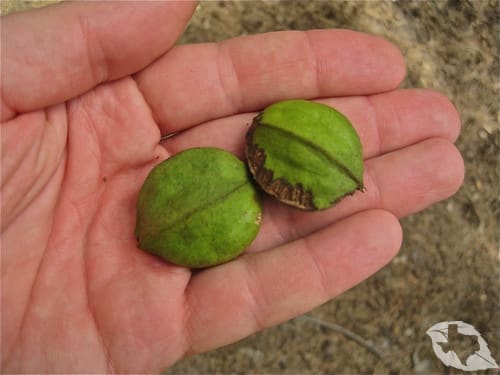
Water hickory bark (inedible hickory).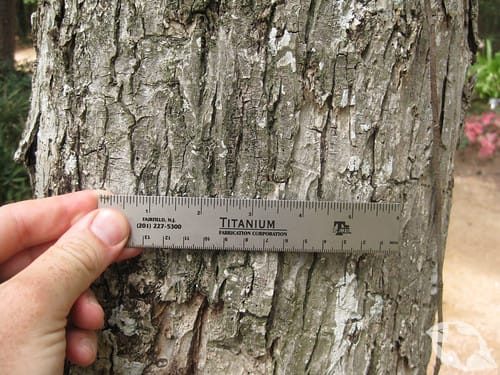
Hickory leaves. Note the compound leaf has nine or less (but always and odd number) leaflets while a pecan leaf will have 11-17 leaflets.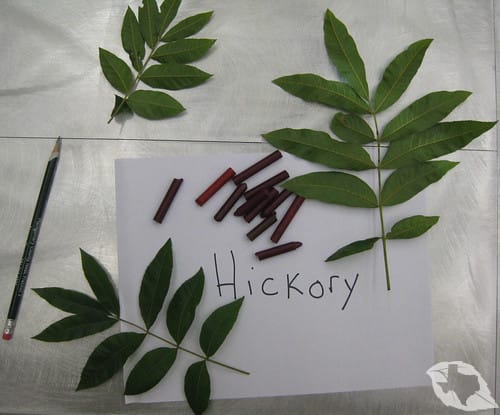
Distribution
North American distribution, attributed to U. S. Department of Agriculture.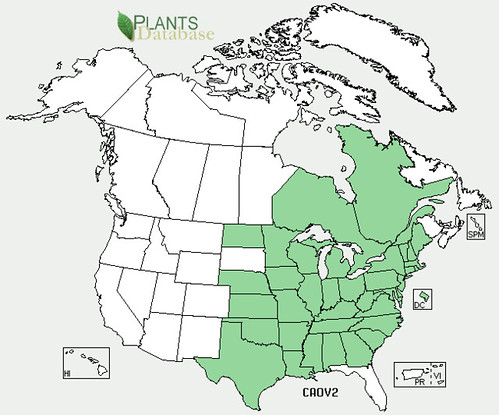
Texas distribution, attributed to U. S. Department of Agriculture. The marked counties are guidelines only. Plants may appear in other counties, especially if used in landscaping.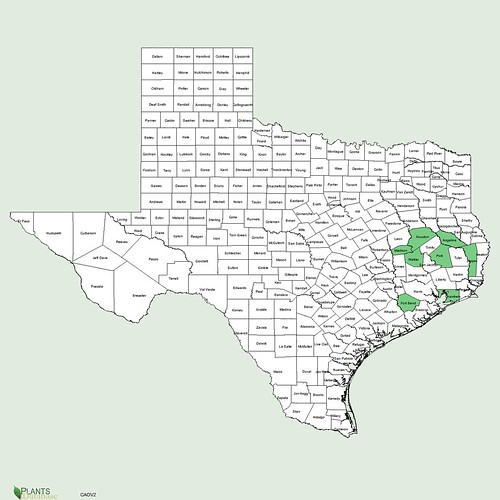
Related to pecans and walnuts, Shagbark Hickory trees aren't nearly as common but when found the nuts are quite tasty. Only the Shagbark species of hickories are edible whereas the Water Hickory (Carya aquatica), though more common, are too bitter to eat.