Scientific name: Cakile lacustris, Cakile maritima, Cakile edentula
Abundance: common
What: leaves, flowers, seed pods
How: cooked, raw
Where: sandy coastal beaches
When: spring, summer, fall, winter
Nutritional Value: minerals, vitamins, flavonoids, antioxidants
Dangers: wash well before eating to remove sand, older plants may be quit strongly-flavored
Identifying Photos
A cluster of sea rocket plants along the beach in Galveston.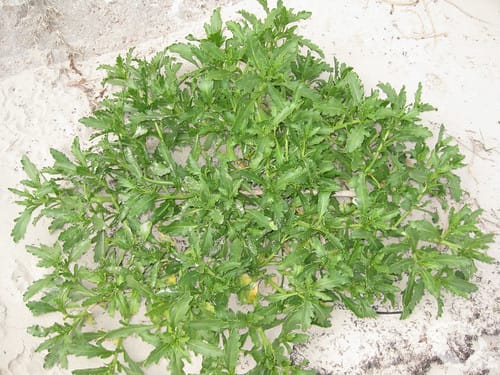
One stem of a sea rocket plant.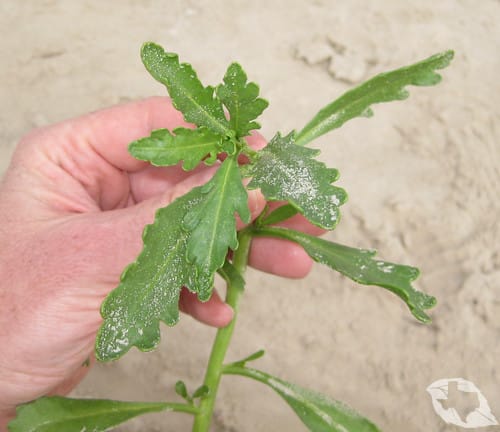
Close-up of new growth of the sea rocket (picture taken in February).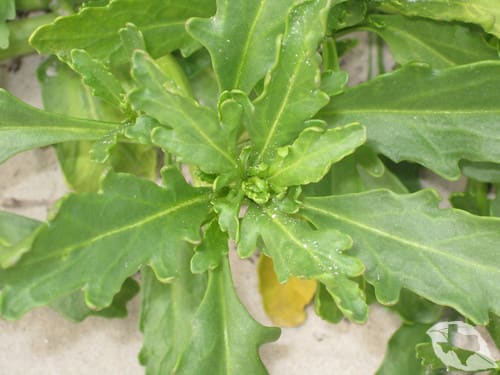
The stem and leaves of the sea rocket (picture taken in February).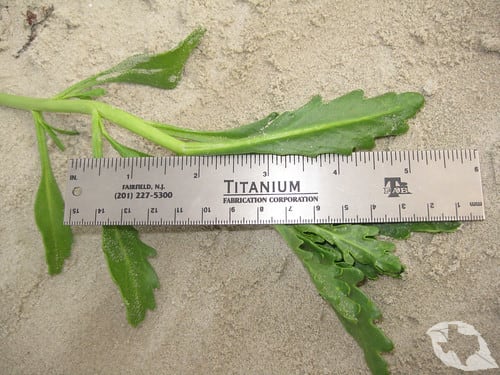
Close-up of sea rocket’s stem and leaves (picture taken in February).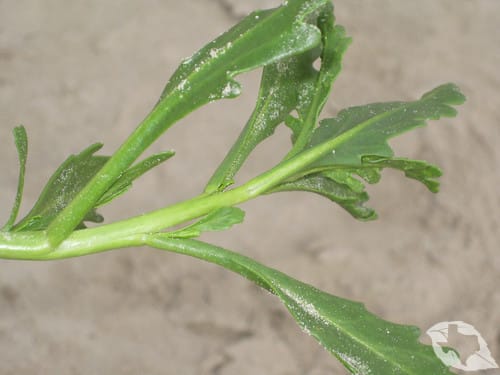
Sea Rocket in summer (June). Seedpods are the dominate structure.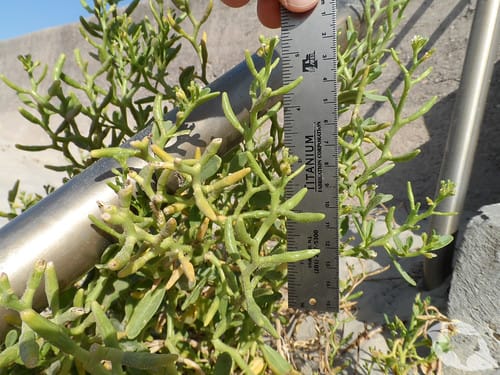
Close-up of Sea Rocket leaves (picture taken in June).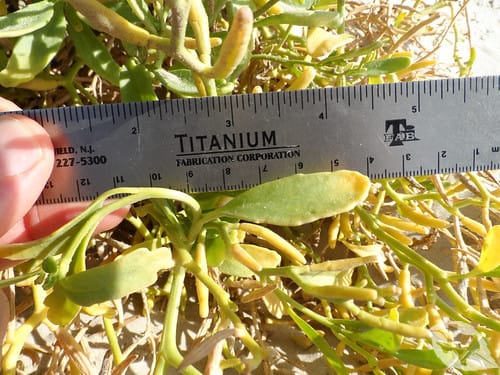
Close-up of Sea Rocket flower.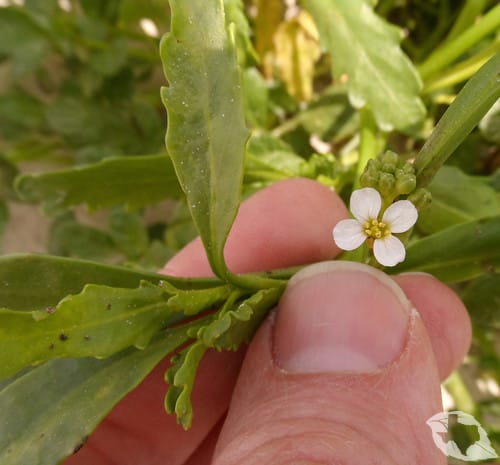
Distribution
North American distribution, attributed to U. S. Department of Agriculture.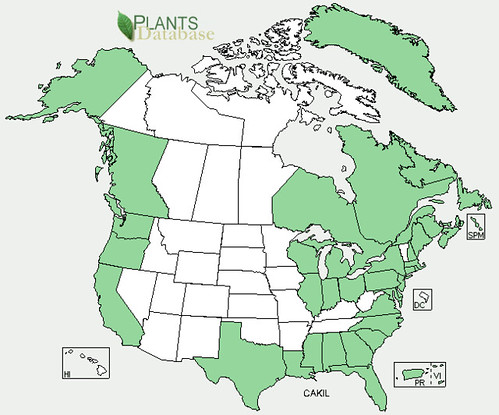
Texas distribution, attributed to U. S. Department of Agriculture. The marked counties are guidelines only. Plants may appear in other counties, especially if used in landscaping.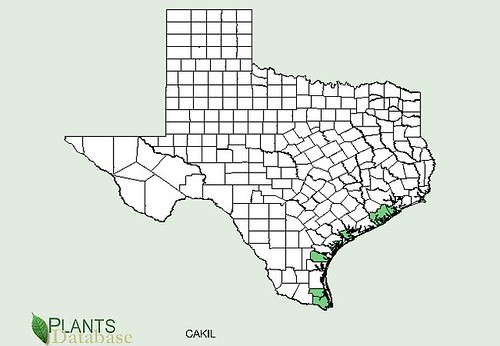
Growing out of the sand dunes at the high tide limit, sea rocket plants look almost alien. Their thick stems and leaves help maintain moisture under the hot sun and burning sands. During the winter they are leafy but come summer their seedpods look almost like a weird inland coral or strange cactus.
Those with a well developed “plant eye” would suspect sea rocket falls in the mustard (Brassica) family and they would be right. As with most Brassicas, sea rockets can have a very potent taste. The actual strength of their mustard-flavor does depends on the individual plant's growing conditions.
In summer the plants will display the traditional Brassica flower: four petals in a cross (cruciform) configuration, usually yellow but occasionally white, six stamens (male pollen-producers), and one pistil (female pollen-receiver). The flowers are edible as are the spicy seed pods which follow. As the plants matures the edible succulent leaves become more and more pungent. Sea rockets can be eaten raw and are good with anything you would normally use mustard or horseradish. They add a bit of a kick to salads.