Scientific name: Sassafras albidum
Abundance: uncommon
What: twigs, roots, leaves
How: drinks, candy
Where: forest edge
When: all year though roots are most flavorful if harvested in late winter
Nutritional Value: none
Dangers: Recent studies suggest a liver cancer link with drinking excessive amounts of sassafras tea.
Identifying Photos
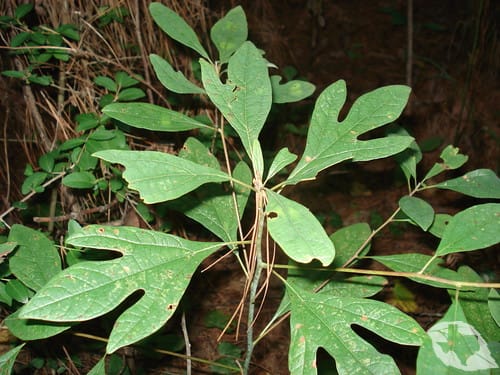
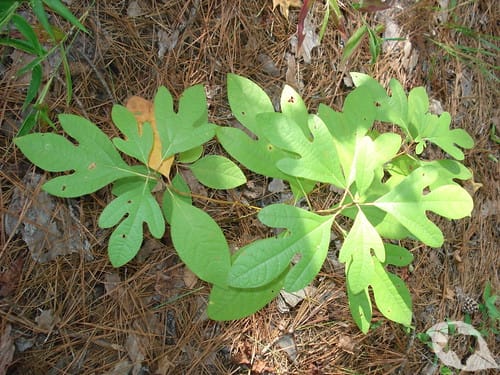
Three types of leaves.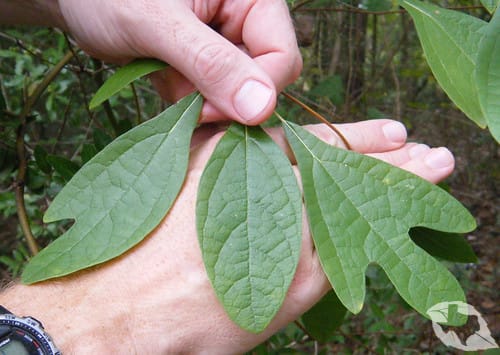
Small sassafras tree.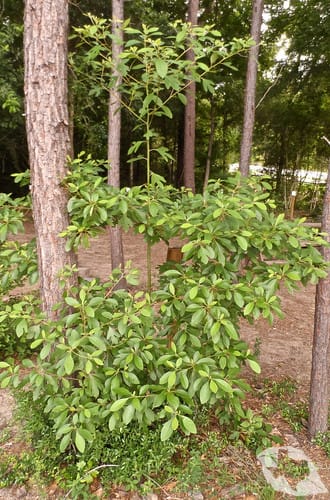
Sassafras tree bark. As they mature the bark turns from green to grayish.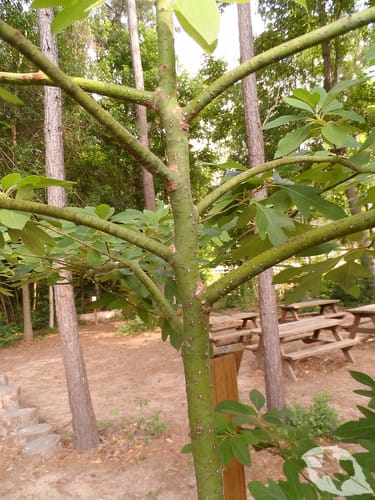
Here’s a bunch of seedlings (greenish trunks) around a mother sassafras tree (brown trunk).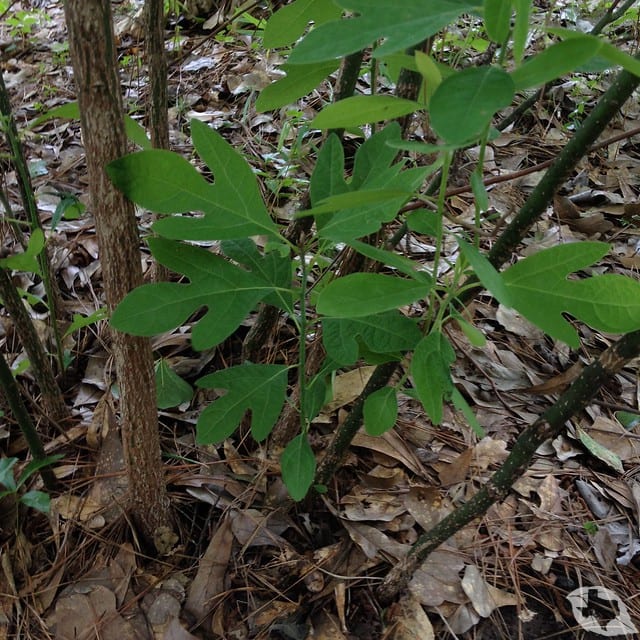
Close-up of Sassafras flowers, which appear in the spring before the leaves. (Picture taken end of February in Houston).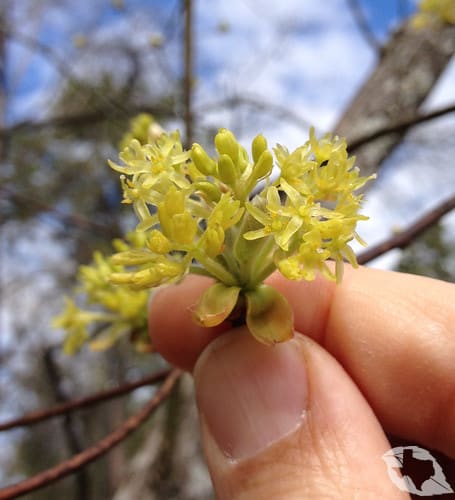
Sassafras berries, appearing in July in East Texas. Photo curtesy of Sassafras Susette Renfro-Taylor.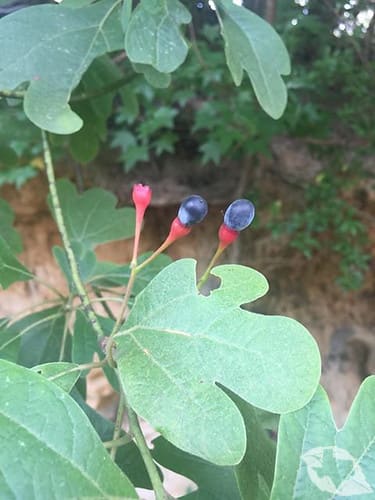
Close-up of sassafras berry. Photo curtesy of Sassafras Susette Renfro-Taylor.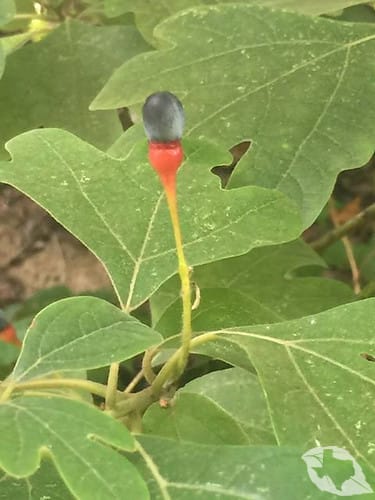
Distribution
North American distribution, attributed to U. S. Department of Agriculture.
Texas distribution, attributed to U. S. Department of Agriculture. The marked counties are guidelines only. Plants may appear in other counties, especially if used in landscaping.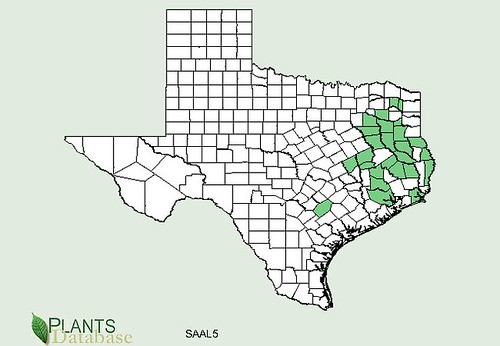
Easily identifiable small tree, just look for the three types of leaves all on one tree. One leaf has three lobes, one has two lobes that look like a mitten, and the third leaf will be unlobed.
Root beer was originally flavored by the roots of sassafras harvested in late winter. Twigs collected at this time will also supply the root beer flavoring chemical “safrole”. The most concentrated amounts of safrole is found in the roots of “suckers” growing around the base of the tree.
Young sassafras leaves are dried, then pounded into a fine Filé powder used in gumbo and other Cajun cooking. Filé powder shouldn't be boiled when cooked as this makes it stringy and alters the flavor. It is better added to the meal in a small serving dish for people to add to the already-cooked gumbo.
Euell Gibbons used to smoke a daily pipe mixture of peppermint, betony and sassafras in hopes that the medicinal properties of these plants would help undo damage done by his daily smoking of tobacco.