Scientific name: Mitchella repens
Abundance: uncommon
What: berries
How: raw
Where: woods, shade
When: late summer, fall, winter
Nutritional Value: Vitamin C
Dangers: None
Medicinal Summary
Berries – diuretic, astringent, sedative, assists with birth, stabilizes with female hormone cycle
Identifying Photos
Partridge berry. Note the two “eyes”.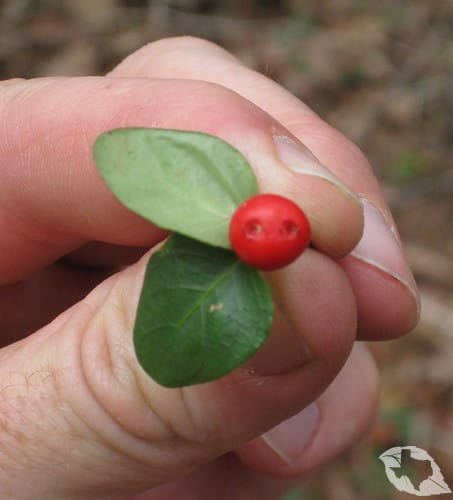
Another closeup of the berry.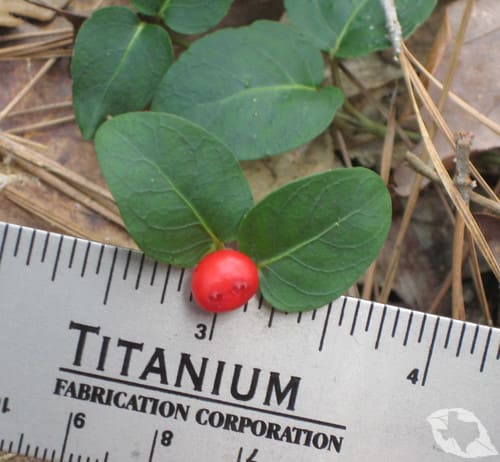
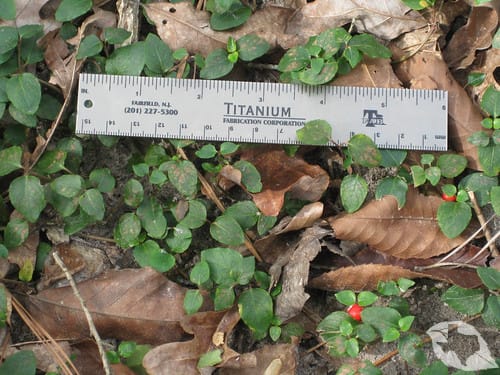
Partridge berry creepers. The berries are found at the end of the plant.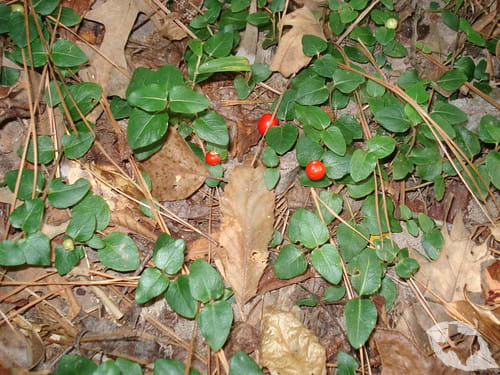
Distribution
North American distribution, attributed to U. S. Department of Agriculture.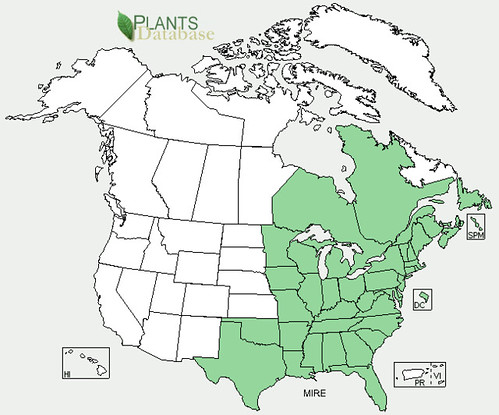
Texas distribution, attributed to U. S. Department of Agriculture. The marked counties are guidelines only. Plants may appear in other counties, especially if used in landscaping.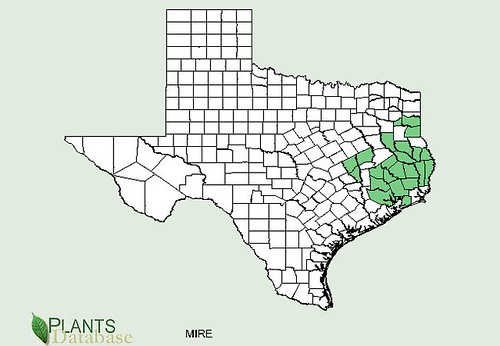
The lowly partridge berry plant forms a ground covering vine throughout the piney woods of Texas. This small, creeping vine-like plant creeps through the fallen leaves with a bright red berry the only really noticeable thing to differentiate it from the similar looking yaupon holly seedlings.
The bright red color of the berries suggest that the fruit itself would have an equally powerful taste but they are actually very bland. These fruit also have a grittiness to their flesh so the overall impression to me is much like very tiny pears. Not being a fan of pears, I'm not wild about partridge berries either. They are fairly nutritious, as most brightly-covered edible plants are and were used as food by native Americans. They can be eaten raw, dried, or made into jellies and jams, though for the later I recommend they be combined with other more strongly-flavored fruit.