Scientific name: Agaricus arvensis
Abundance: uncommon
What: mushroom
How: cooked
Where: yards
When: summer after rain
Nutritional Value: carbohydrates, minerals
Dangers: mimics include the deadly death cap and destroying angel mushrooms (Amanita species). Choose wisely.
Identifying Photos
COLLECTING MUSHROOM REQUIRES 100% CERTAINTY. WWW.FORAGINGTEXAS.COM ACCEPTS NO RESPONSIBILITY FOR IDENTIFICATION ERRORS BY ANY READERS.
Horse mushroom top view.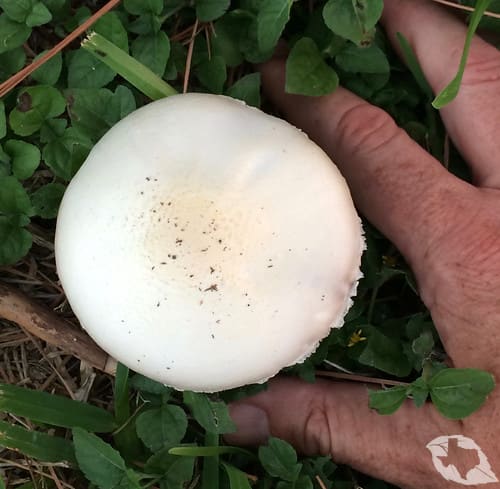
Side view of the mushroom. Note the sheath remains go upwards rather than hanging down.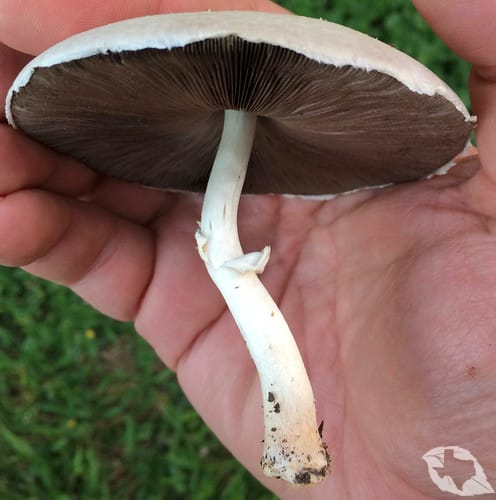
Underside of same mushroom.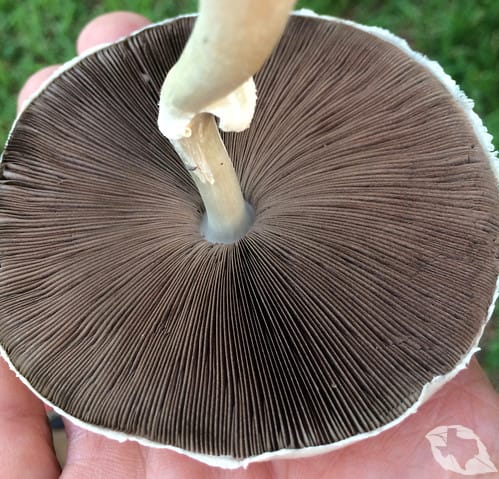
Close-up of stem-gill junction. Note how the gills stop before reaching the stem.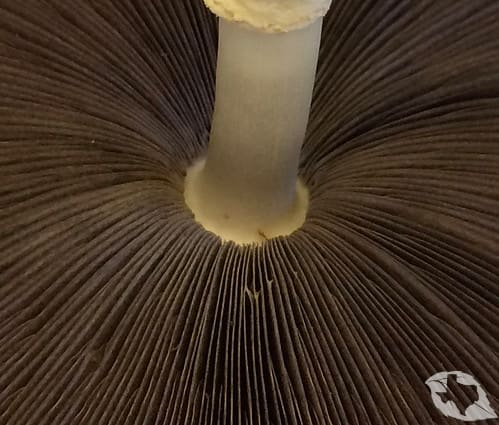
Close-up of bisected cap. Horse mushrooms have true gills.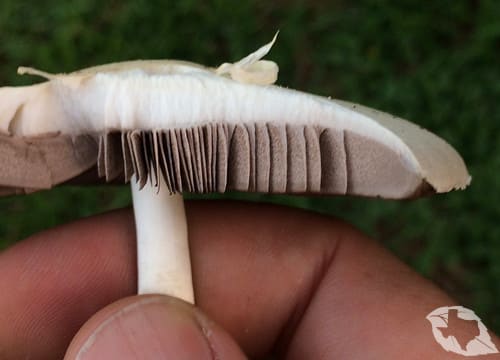
Another close-up of the gills.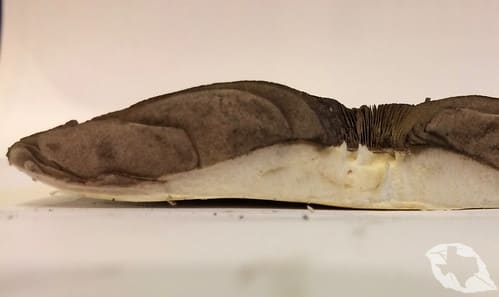
Extreme close-up of gills at cap’s edge.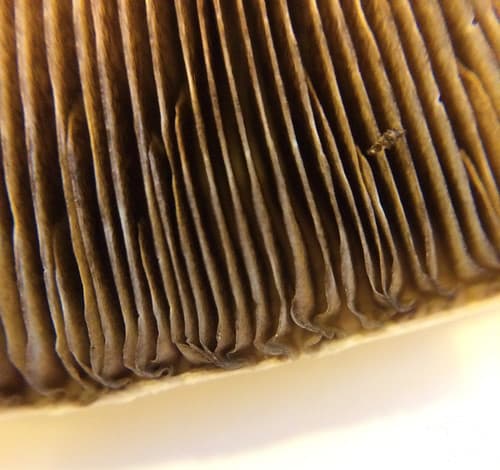
Another view of the horse mushroom.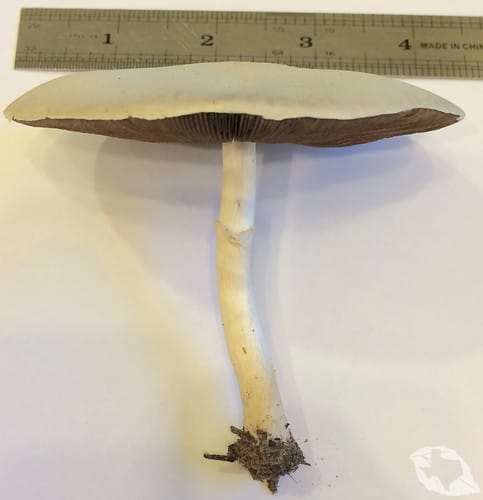
Top view of a younger horse mushroom. Note the pinkish color of the gills.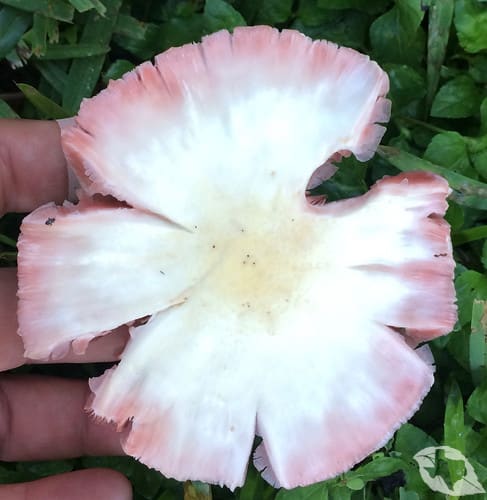
Underside of same mushroom.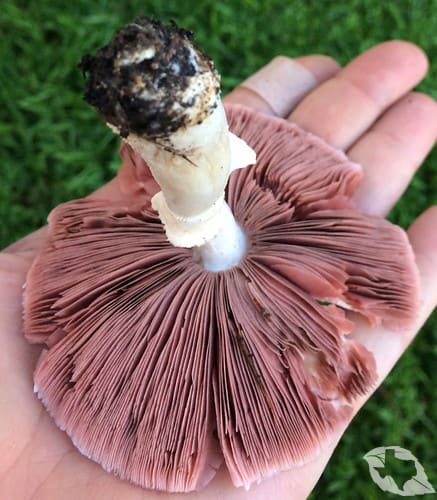
The gills start pinkish, turn brown, then end a very dark brown color.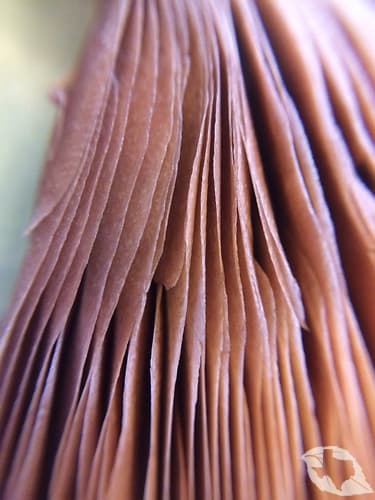
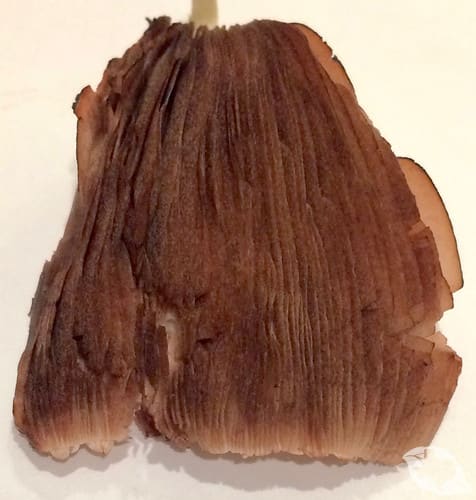
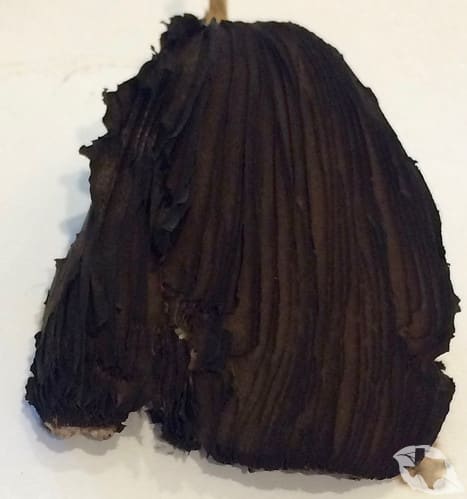
Spore print is very dark brown, almost black.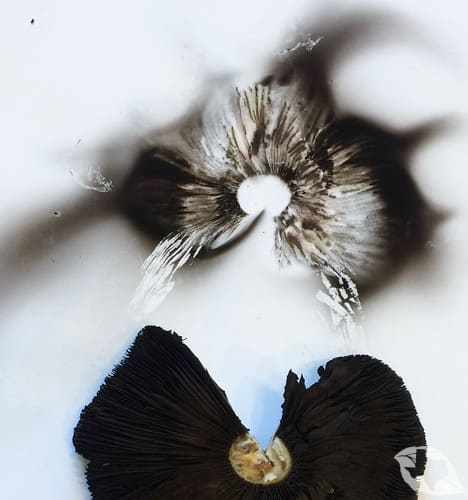
Horse mushrooms are one of the fungi that pop up in people's yards three days after summer rain. Of course, there are several extremely poisonous, look-alike mushrooms that also like yards so proper identification is crucial. I consider this to be an advanced-level mushroom.
The key identifiers of a horse mushroom:
- Gills start out pink but turn a dark, chocolatey brown color.
- Gills are true (separate tissue from cap).
- Gills end just before the stem.
- Gills don't run the entire length of the cap.
- The annulus/ring of the veil on the stem runs upwards rather than hanging down.
- Cap top is white to yellowish with brownish specks of the veil.
- No volva (cup-like remains of veil) on base of stem.
- Spore print is dark brown to almost black in color.
- A cut base won't turn yellow.
- A scratched cap may turn very slightly pale yellow.
Like other wild mushrooms, always cook horse mushrooms to both kill any insect inhabitants and to destroy some weakly poisonous compounds found in ALL (wild and domestic) mushrooms. As mentioned earlier, these are generally a summertime mushroom in Texas, appearing three days after a good rain.
Now, because I don't want you to die, here's signs you have one of the deadly Amanita mushrooms:
- Gills are white.
- There's a volva at the base of the stem.
- Veil annulus/ring hangs downward.
- Usually bulbous at base of stem.
- If the scratched cap turns neon yellow it's likely an Agaricus xanthodermus which is also poisonous.
If you see any of these on the mushroom just let it be.
Once you've properly identified horse mushroom feel free to use it like any store-bought “button” mushroom. Ideally you'll find the horse mushrooms when they're still small and round. Slice them up and sauté them in butter with garlic, throw them on a pizza, add them to stuffing or soup! I'm still trying to find a way to preserve them. The internet suggests freezing them but I personally think that's a terrible thing to due to a mushroom. Pickling them like Chicken of the Woods might be better.