Scientific name: Salvia lyrata
Abundance: common
What: leaves
How: raw or cooked when young, tea after flowers form.
Where: Full sun, borders and light woods
When: winter, spring
Nutritional Value: Low
Medicinal Summary
Leaves – laxative; cough suppressant; weak antibiotic (tisane)
Root – wound healer (poultice, infused oil, salve)
Identifying Photos
When in flower, lyreleaf sage makes clusters of light-purple flowers along roadsides.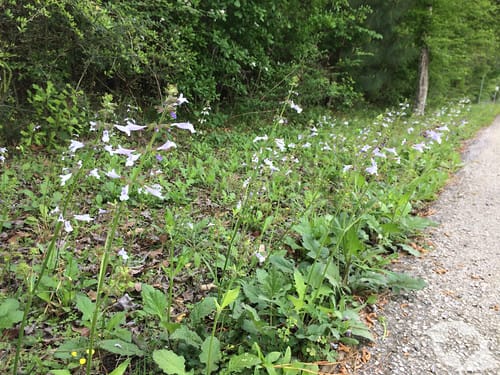
Young plant (eat at this stage). Note the purple veins and leaf stems.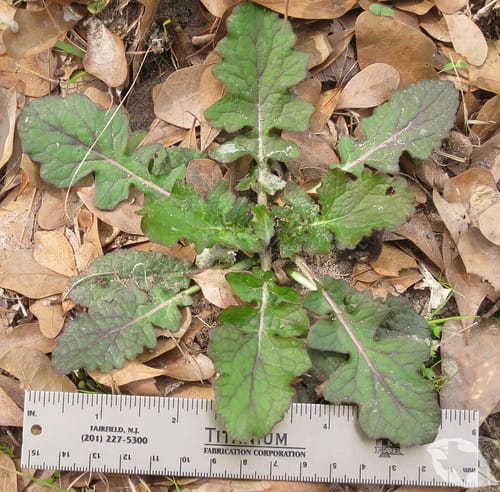
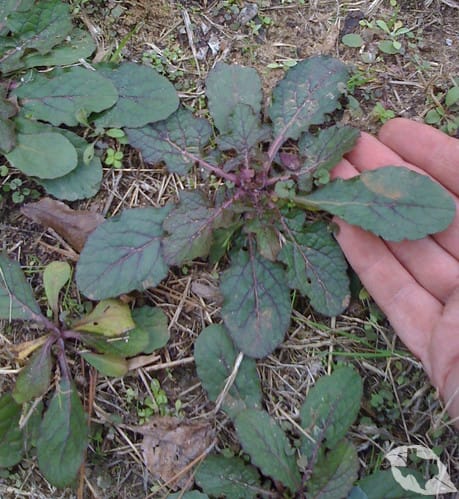
Close-up of leaf. Note the hairs.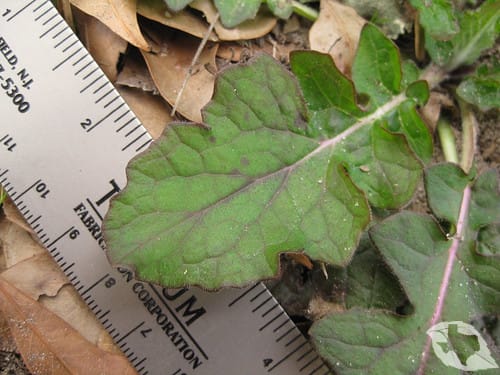
Mature lyreleaf sage with flower stalk (less tasty at this stage).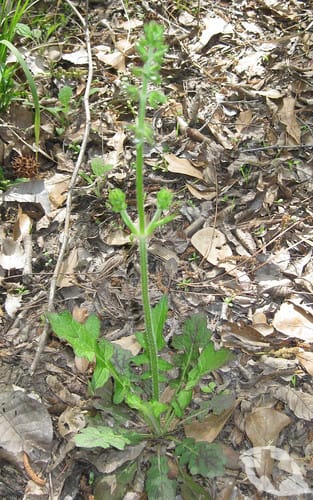
Lyreleaf Sage flower stalks usually split into three stems.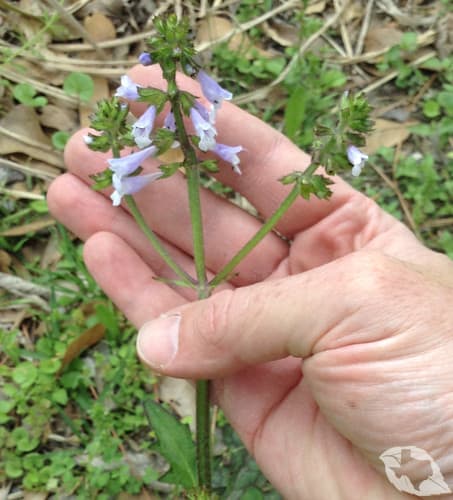
Close-up of lyreleaf sage flowers.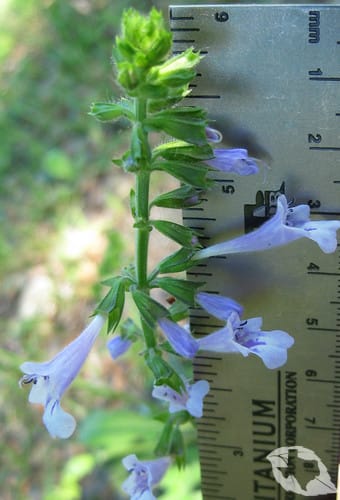
Stem after dropping flowers.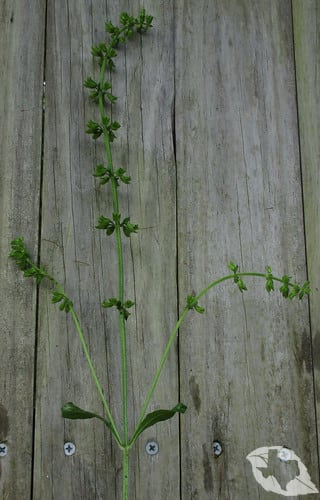
Distribution
North American distribution, attributed to U. S. Department of Agriculture.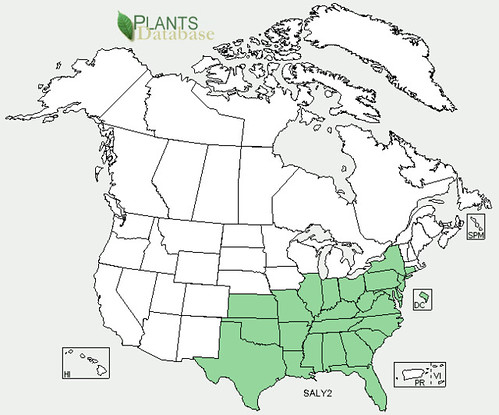
Texas distribution, attributed to U. S. Department of Agriculture. The marked counties are guidelines only. Plants may appear in other counties, especially if used in landscaping.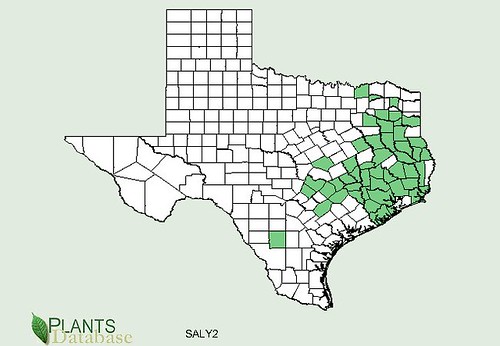
Lyreleaf sages quickly cover the ground wherever they show up giving rise to it's other common name, “Cancer Weed”. As winter turns to spring these purplish plants send up flower stalks which split into three stems, each with multiple long, thin, small light violet/purple flowers. One quickly learns to spot beds of lyreleaf sage by the large beds of these flowers. Being in the mint family, the flower stem is square. Both the stem and leaves are hairy. The veins will be purple and under the right conditions the entire leaf may be purple. I thought the amount of purple was due to sunlight but now I'm thinking its more a factor of watering.
Young lyreleaf sages have a weak, somewhat minty flavor when young. It is good in salads or in cooked dishes where a bit of mint flavor is wanted. After it flowers the dried plant can be used to make a weak mint tea. Like all mints, it has a square stem and can be very invasive.
The youngest leaves are used raw in salads but as the plant matures I find the leaf texture is improved by cooking.
Native Americans were the first to notice how this plant spreads across an area like a cancer and following their belief that “like cures like” they thought it could be used to treat cancer. Western science has not put much effort into determining if it does have any special anti-cancer properties but it is generally believed to not fight cancer.