Scientific name: Saururus cernuus
Abundance: uncommon
What: roots, leaves
How: tea
Where: moist areas, edge of water.
When: spring, summer, fall
Nutritional Value: none
Medicinal Summary
Roots – sedative; pain relief; wound healing (tisane)
Identifying Photos
Bed of Lizard’s Tail plants.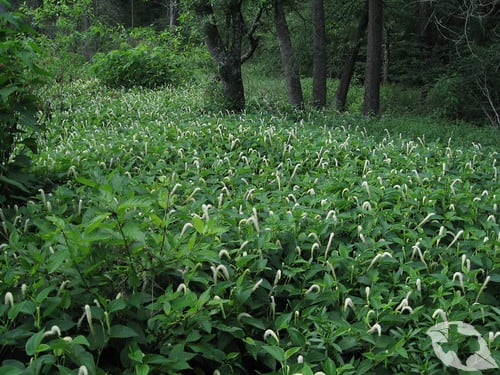
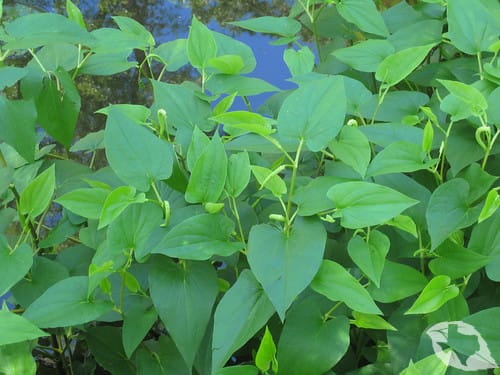
Close-up of leaf.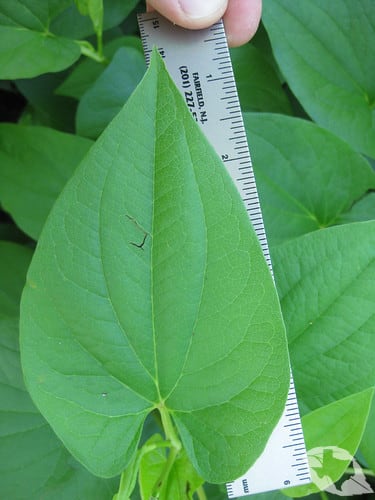
Lizard’s Tail flower stalk before flowers develop.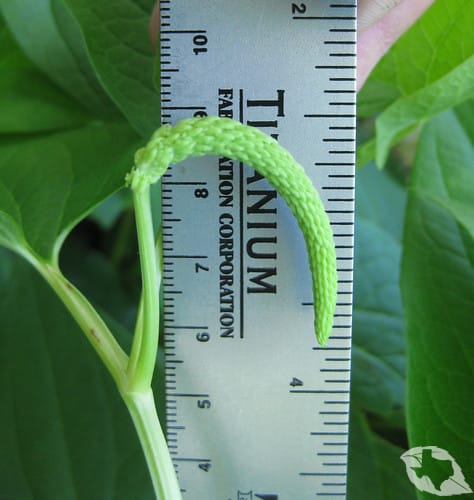
Lizard’s Tail flowerhead and leaves.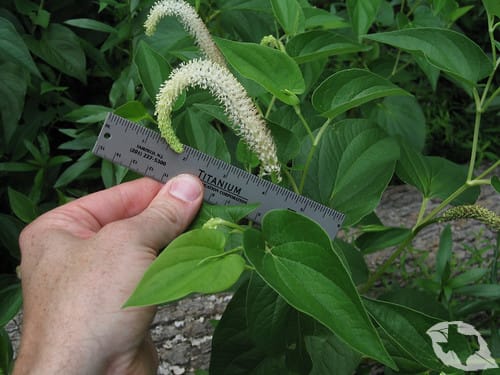
The rhizome roots of Lizard’s Tail.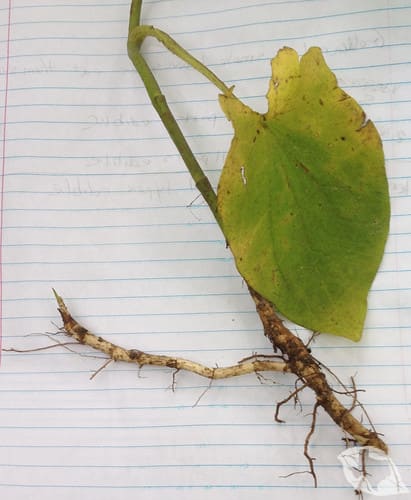
Distribution
North American distribution, attributed to U. S. Department of Agriculture.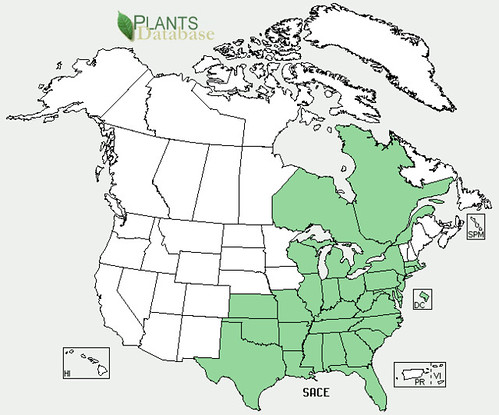
Texas distribution, attributed to U. S. Department of Agriculture. The marked counties are guidelines only. Plants may appear in other counties, especially if used in landscaping.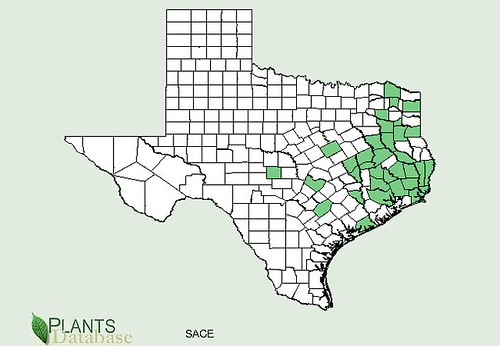
Look for Lizard's Tail lining the banks of shaded Texas ponds beginning in the late winter and lasting until mid-fall. The “tails” show up in late April, blossoms in May, and are gone by July. The root can be gathered any time of year.
It has no edible/nutritional value but its roots have a long history of being used medicinally as a tea, which has both sedative and some pain-relieving properties. A wash made from boiled roots was used as a surface wash for rheumatism. Also, a paste of boiled then mashed roots was applied the sore, chapped breasts of nursing mothers and to heal flesh wounds.