Scientific name: Equisetaceae spp.
Abundance: uncommon
What: young stems, roots
How: tea with young stems boiled in 3-4 changes of water or roots after roasting
Where: near water
When: young shoots in the spring, roots all year
Nutritional Value: minerals
Other uses: These plants contain a large amount of silica which makes them excellent for scrubbing dishes in the wild. They also contain some very astringent compounds which makes mashed-up horsetails an excellent clotting agent to help stop bleeding.
Dangers: Equisetaceae species contain thiaminase, an enzyme which removes vitamin B from the body. This enzyme is destroyed by cooking the horsetails.
Medicinal Summary
Stems – hemostat; wound Healer; diuretic; assists rebuilding non-chronic connective tissue damage (poultice, tisane)
Identifying Photos
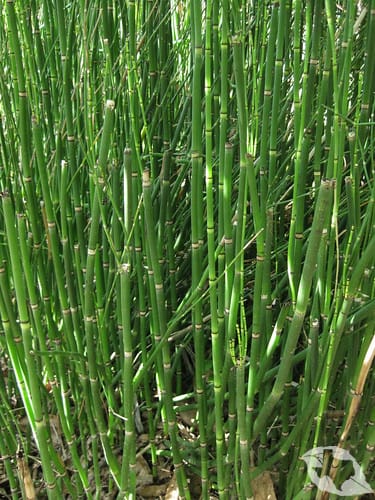
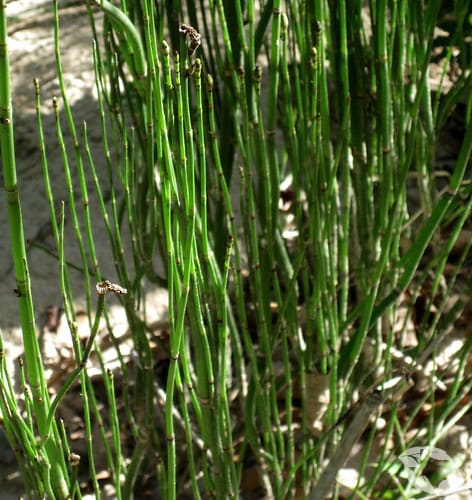
Close-up of stalk tip.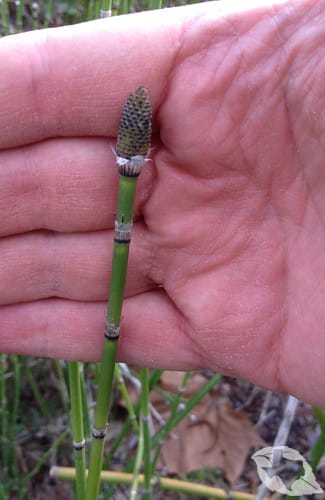
Flowers maturing left to right.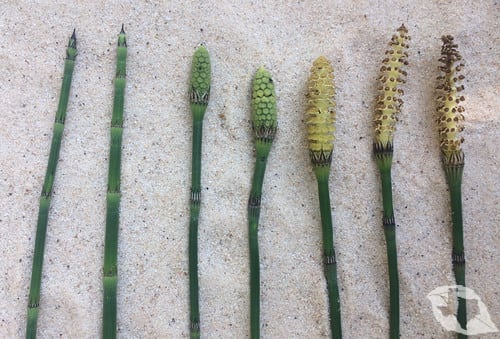
Really close-up of Horsetail tips.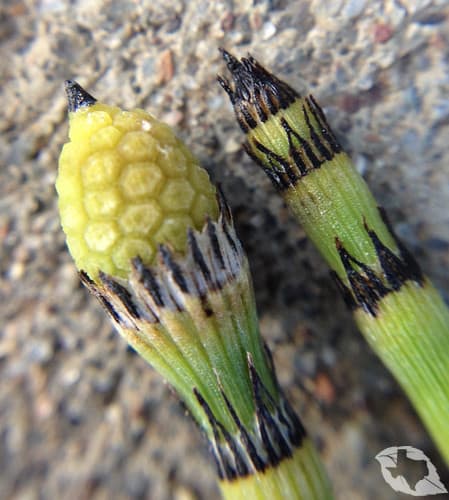
Close-up of Horsetails “joints”.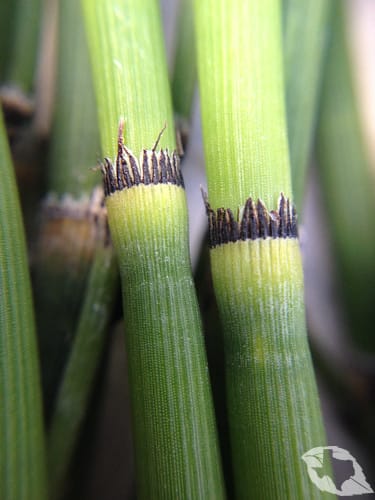
Getting ready to clean some pots.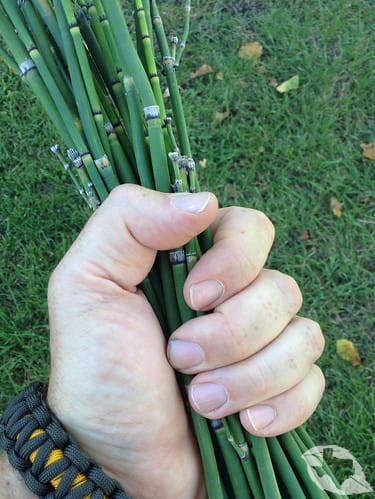
Distribution
North American distribution, attributed to U. S. Department of Agriculture.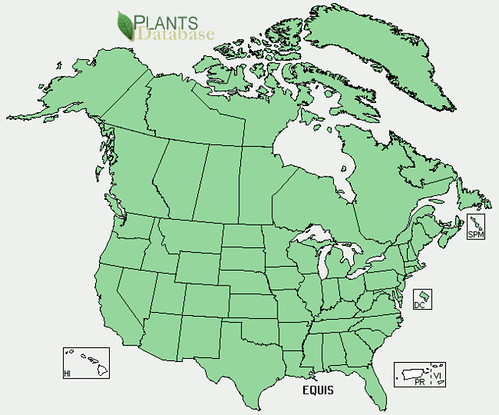
Texas distribution, attributed to U. S. Department of Agriculture. The marked counties are guidelines only. Plants may appear in other counties, especially if used in landscaping.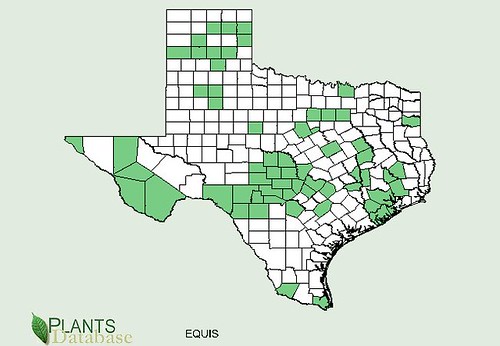
Looking like prehistoric reeds, horsetails are found in large clumps in the sandy soil along Texas streams. They look prehistoric because they are prehistoric, being 100 million years old. Horsetails reproduce via spores rather than seeds, which puts them closer to ferns than most other vascular plants. A tall stand can reach 30 inches high and densely packed.
Tea from the plant has a slight “black licorice” crossed with green tea flavor. Crushed up a 6-8 horsetails into a cup of water and then boil them for ten minutes. Let stand until cool enough to drink. The silicic acid found in horsetail tea is thought to strengthen the walls of blood vessels and the air sacs in lungs along with promoting regrowth of damaged joint tissue. Its astringent chemicals reduce bleeding especially in the mouth and act as a diuretic to flush out the body.
The high silicate content of horsetails makes them excellent wilderness pot scrubbers. A handful of them rubbed will quickly scrap clean a dirty cook pot, as many old boy scouts know.