Scientific name: Ilex opaca
Abundance: common
What: leaves
How: dried then made into tea
Where: shady woods
When: spring, summer, fall, winter
Nutritional Value: flavoring
Dangers: do not consume berries
Identifying Photos
American holly leaves and berries in winter.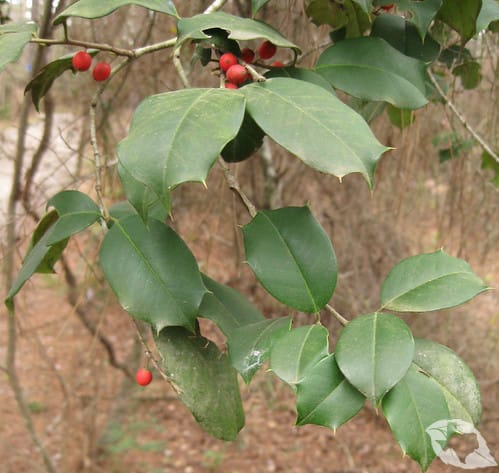
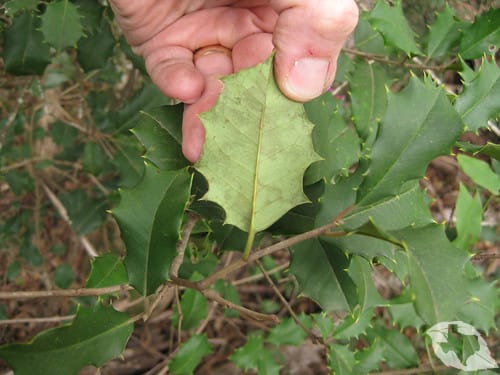
Close-ups of American holly leaves. Note the lighter-colored underside.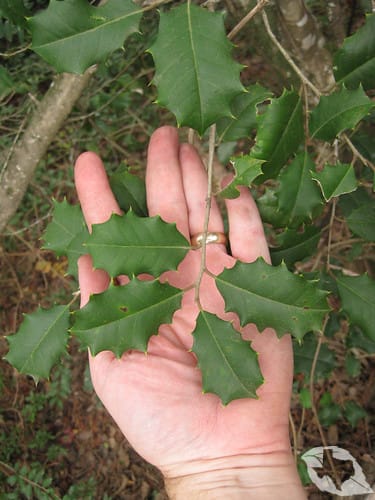
Close-up berries. They are toxic, do not eat!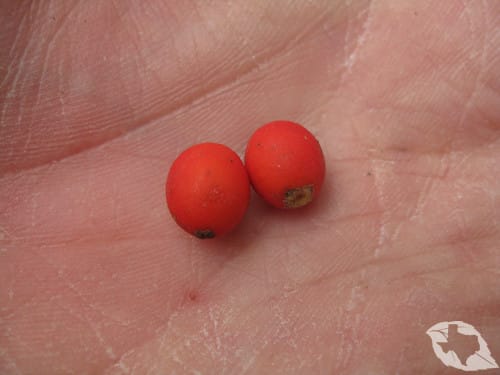
American holly trunk.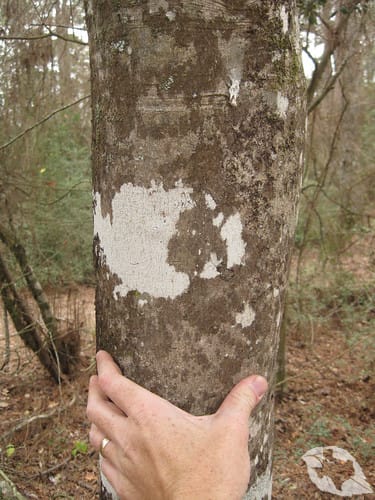
American holly tree.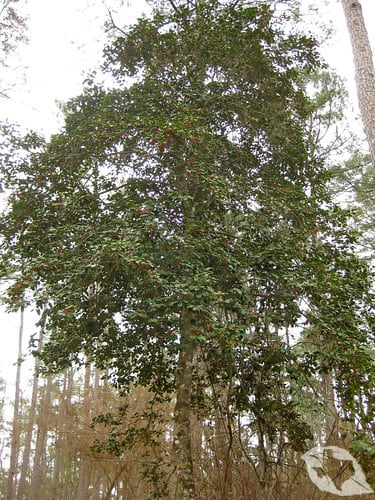
Distribution
Texas distribution, attributed to U. S. Department of Agriculture. The marked counties are guidelines only. Plants may appear in other counties, especially if used in landscaping.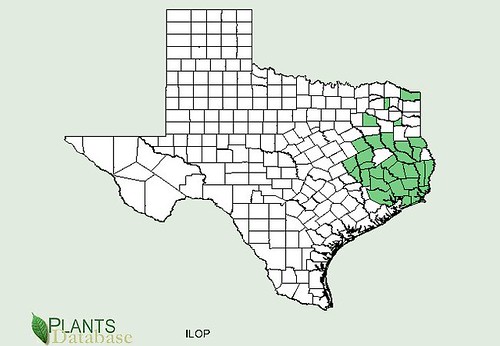
North American distribution, attributed to U. S. Department of Agriculture.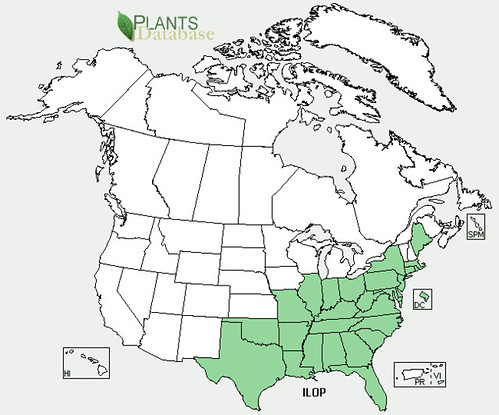
The American holly can be found all over the woods of east Texas. Growing in shade to heights up to fifty feet tall, this evergreen, pointy-leafed tree are the traditional source of Christmas wreaths. The berries are somewhat toxic and should not be eaten but the dried leaves make a pleasant, slightly wintergreen-flavored tea. Let the leaves dry for at least six weeks before using for tea. waiting this long will allow the leaves' cell walls to break down some, making it easier for the flavors to seep out.