Scientific name: Trifolium repens L.
Abundance: common
What: leaves, flowers, root
How: leaves-raw or cooked before flowers appear; flowers-raw, cooked, dried for tea or flour, also smoked; root-dried then cooked
Where: lawns, fields
Nutritional Value: protein
Dangers: soon after picking white clover can form dangerous cyanide.
Identifying Photos
A patch of White Clover.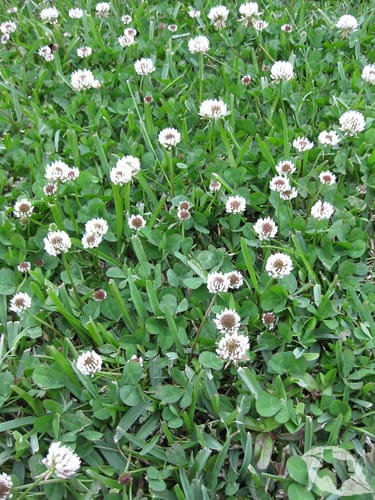
Close-up of leaves and flower.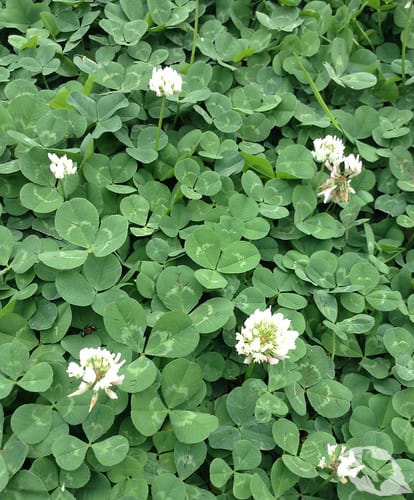
Very close-up of White Clover flower.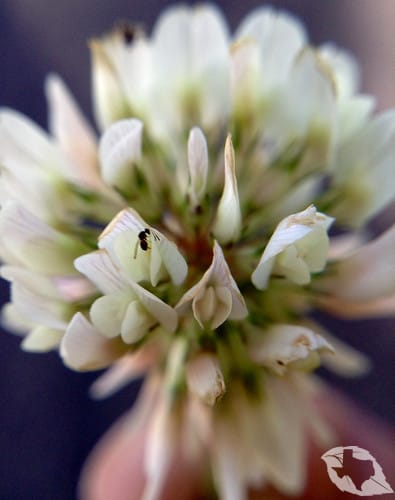
Clover leaves (right) are rounded while Wood Sorrel leaves (left) are heart-shaped.
Distribution
North American distribution, attributed to U. S. Department of Agriculture.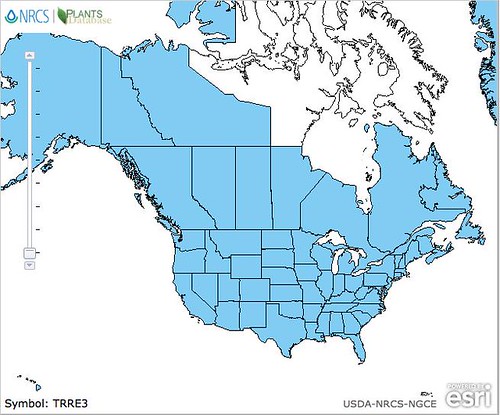
Texas distribution, attributed to U. S. Department of Agriculture. The marked counties are guidelines only. Plants may appear in other counties, especially if used in landscaping.
Many homeowners wage chemical warfare on patches of white clover in their grass without ever realizing that this plant not only produces nitrogen necessary for healthy grass, it's also delicious and nutritious! Both fresh or dried clover flowers can seeped in hot water to make a fantastic, naturally sweet tea. The leaves and roots can be added to stews, soups and other simmered dishes for a boost of protein. I like adding it to tomato-based sauces whose acidity helps break down and “pre-digest” the protein, making it easier for human stomachs to digest it.
The flowers and leaves must be used either within 30 minutes after picking or left to dry for 4-6 weeks. Soon after being picked the plant starts producing cyanide compounds and in an hour or less they can become dangerous to eat. If left to dry for 4-6 weeks these cyanides will disappear. For this reason one should NOT include clover when making sauerkraut, kimchi, or other fermented greens as the fermentation process doesn't interfere with the production of cyanide.
Dried white clover flowers make a very pleasant tasting herbal smoke.