Scientific name: Melilotus officinalis
Abundance: common
What: flowers, seeds, leaves
How: flowers in tea, seeds raw or roasted then ground into flour, leaves in salads or cooked
Where: Neglected areas, fields, yards
Nutritional Value: starch in the seeds, protein in the leaves
Medicinal Summary
Flowers/Leaves – blood thinner; would healer (tisane)
Identifying Photos
Sweet Clover plant.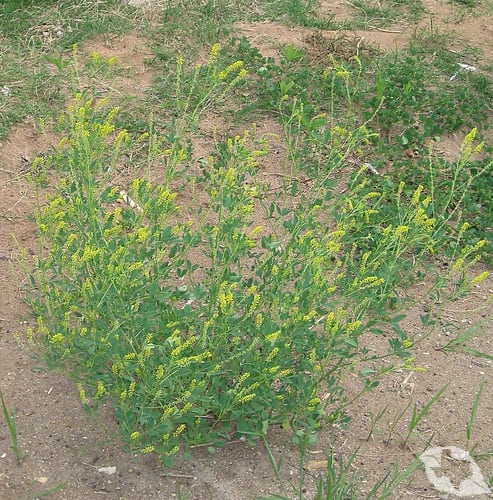
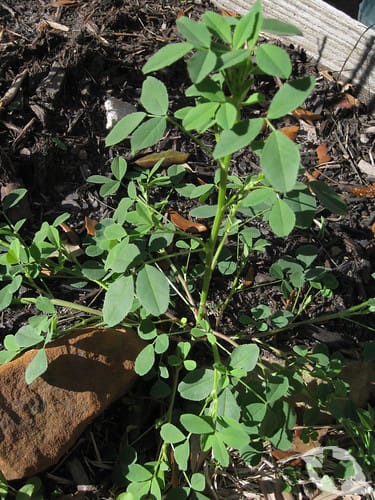
Close-up of Sweet Clover leaves.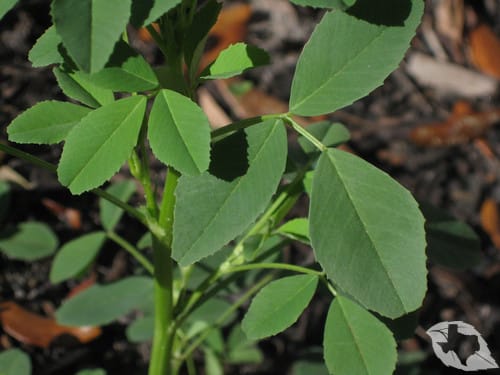
Close-up of Sweet Clover leaf top.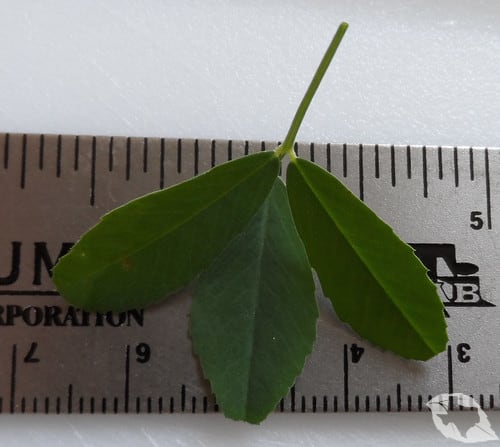
Close-up of Sweet Clover leaf bottom.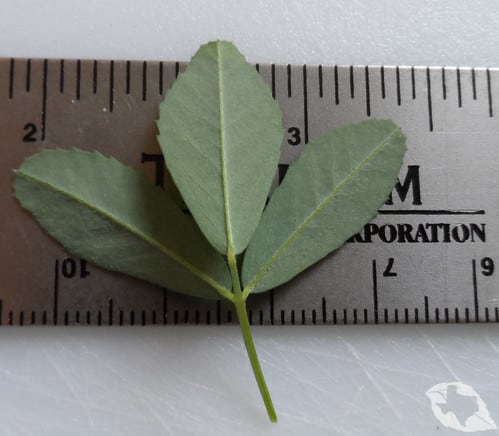
Sweet Clover flowers.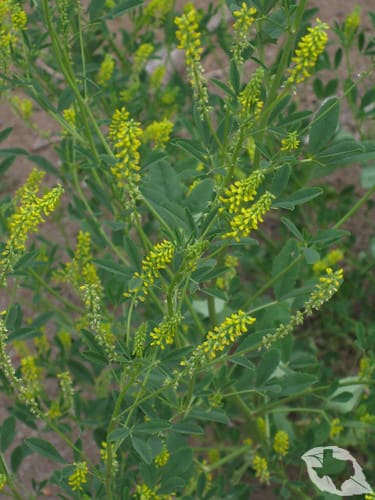
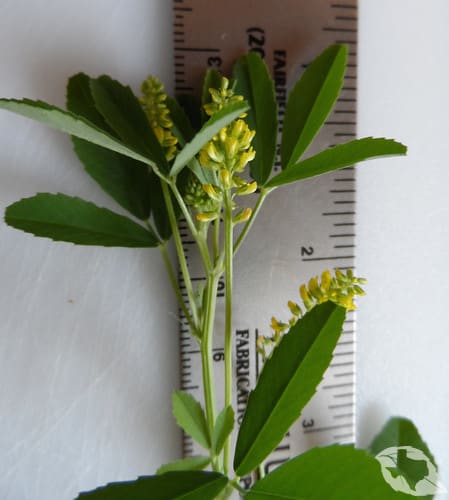
Close-up of Sweet Clover flowers.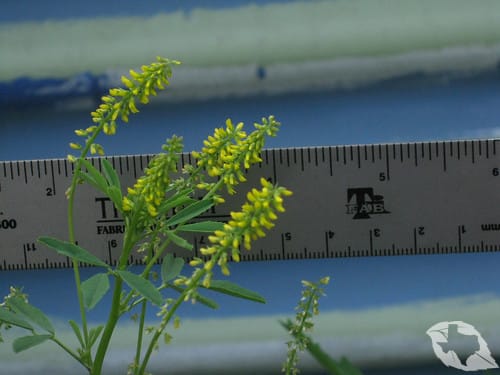
Distribution
North American distribution, attributed to U. S. Department of Agriculture.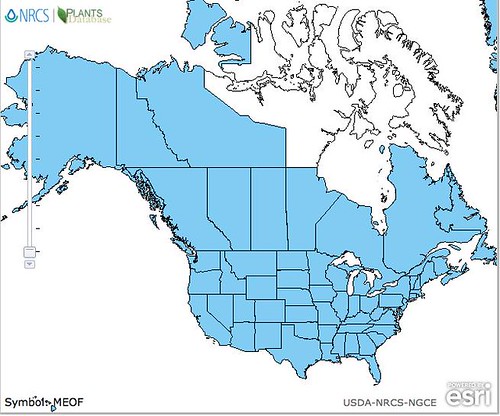
Texas distribution, attributed to U. S. Department of Agriculture. The marked counties are guidelines only. Plants may appear in other counties, especially if used in landscaping.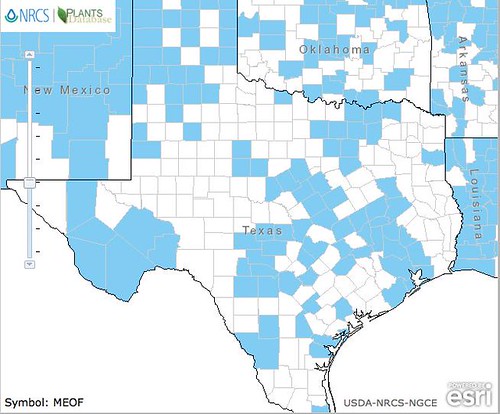
Sweet Clover have the same three-leaf shape as regular clover but the plant itself grows upright to over a two feet tall. Its young leaves can be eaten raw but can be slightly tough. The yellow flowers can be used to make a sweet clover tea. These flowers eventually form individual seedpods each containing one seed. These seeds can be eaten raw or roasted then ground into flour. Like most seeds they can also be boiled into a porridge or gruel.
Like other clovers, hops clover can fix atmospheric nitrogen, turning it into a form usable by other plants. For this reason it is a good “weed” to let grow in your garden as it will fertilize nearby plants.