Scientific name: Trifolium pratense
Abundance: uncommon
What: leaves, flowers
How: leaves raw or boiled; flowers tea or smoked
Where: sunny fields
When: spring, summer
Nutritional Value: protein, assorted medicinal compounds
Medicinal Summary
Flowers – possible female hormone replacement; soothes hot flashes; adjusts menstrual irregularities (tisane)
Identifying Photos
Red clover (plus some white clover around the edges)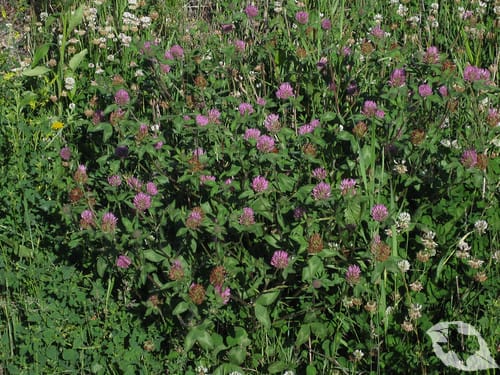
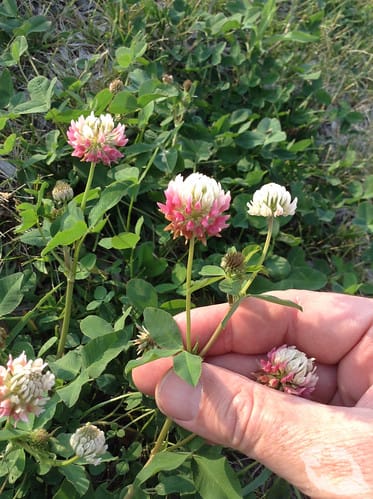
Close-up of red clover flower. Note the white “V” chevrons on the leaves (somewhat hard to see in this picture).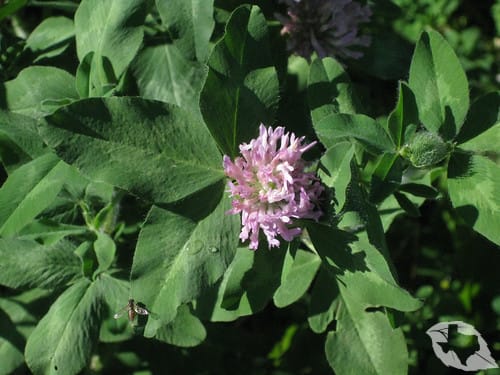
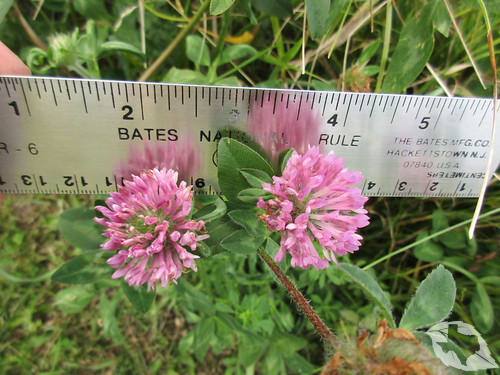
Extreme close-up of Red Clover flower.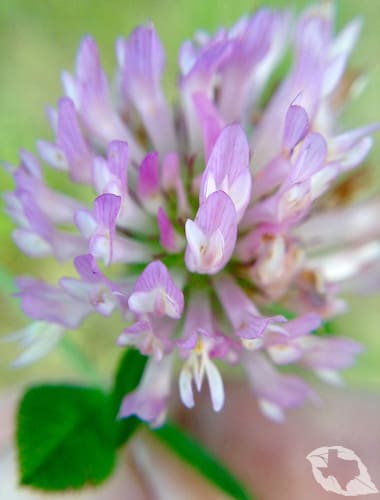
Red clover leaf. Note the white “V” on each leaflet.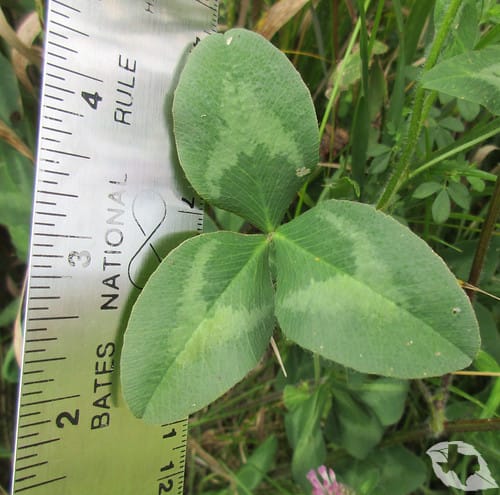
Red clover stems are hairy.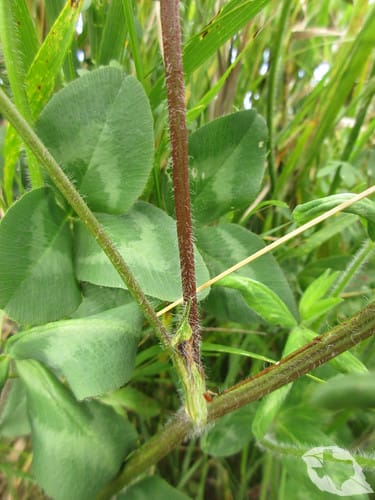
Distribution
North American distribution, attributed to U. S. Department of Agriculture.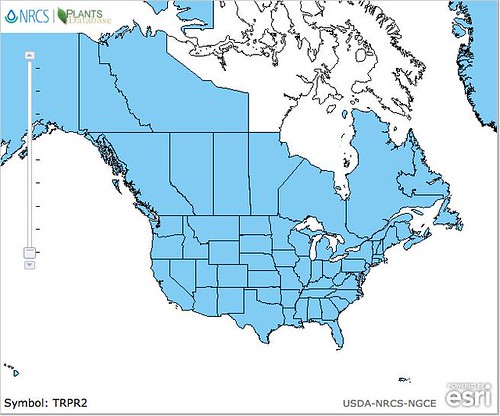
Texas distribution, attributed to U. S. Department of Agriculture. The marked counties are guidelines only. Plants may appear in other counties, especially if used in landscaping.
Red clovers fill fields and country roadside ditches with bright splashes of color. They form thick colonies of plants, usually well under two feet tall. They are often planted on purpose along Texas roadside for their color and beauty.
Red clover leaves and flowers can be eaten raw but they are easier to digest if boiled for a bit. More often the flowers (fresh or dried) are made into beneficial tea. Seep/simmer (don't boil) the red clover leaves and flowers in water for about ten minutes to release its full flavor and helpful chemicals such as salicylic acid (aspirin), trypotphan (sleep inducer), genistan (anti-cancer agent), and estrogenic chemicals.
Red clover turns purple as it dries. If picked still red and allowed to dry it creates a delicious flavored smoke. However, don't bother trying to smoke flower heads which dried still on the plant, they aren't nearly as flavorful.