Scientific name: Galium aparine
Abundance: plentiful
What: seeds, leaves, stems
How: seeds roasted for coffee, leaves/stems raw though better cooked; tea from stems & leaves
Where: fields, yards, woods, sunny areas
Nutritional Value: Vitamin C
Dangers: They can be eaten raw but their tiny hairs irritate most people. Cooking them removes this problem.
Medicinal Summary
Leaves/Stem – soothes minor skin inflammations; heals wounds, burns, poison ivy, bruises, dermatitis, and sprains; diuretic; anti-inflammatory; antibacterial; antifungal; immune system enhancer; soothes gastrointestinal and urinary tract inflammations; flushes kidney stones; laxative; antiviral; high in vitamin C (poultice, tisane, tincture)
Identifying Photos
A single strand of a Cleaver plant, ready to be boiled.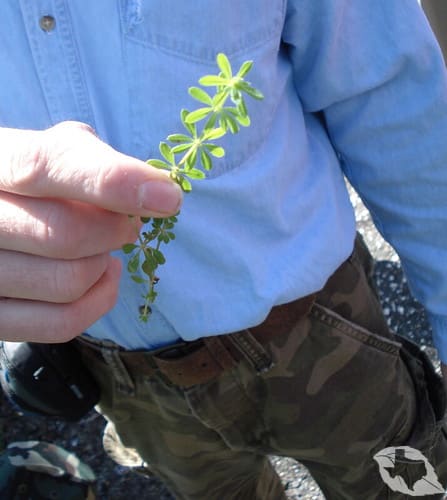
Cleaver seedlings which can be eaten raw at this point.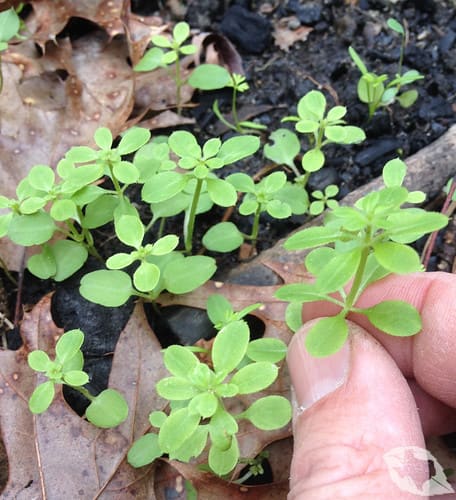
Young Cleavers past their raw edibility stage.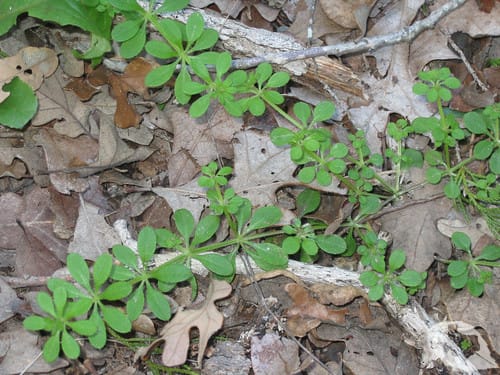
A mass of mature Cleavers.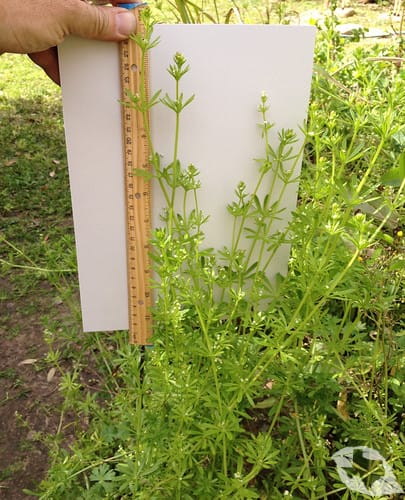
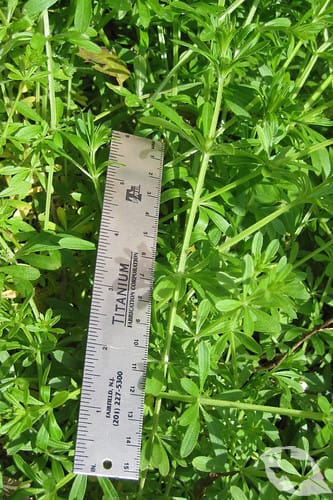
Close-up of Cleaver leaves.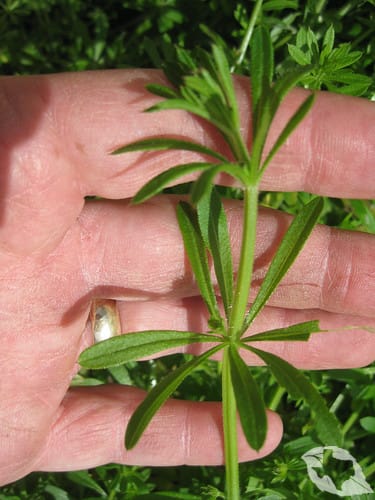
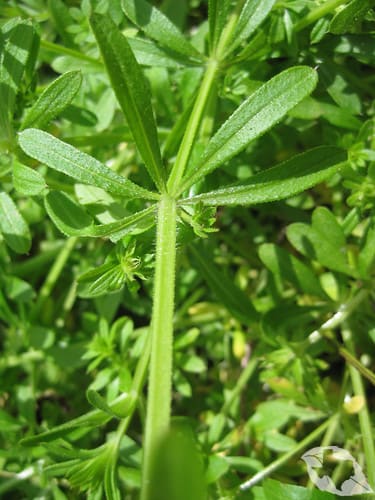
Close-up of cleaver flower.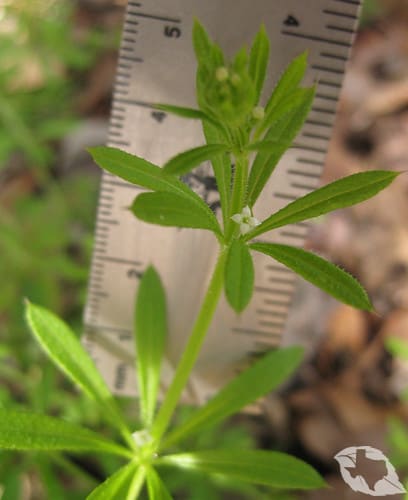
Mature Cleavers.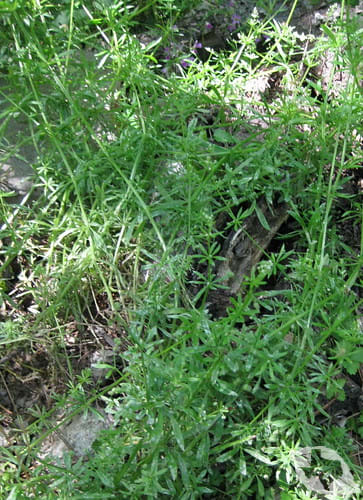
Cleaver seeds.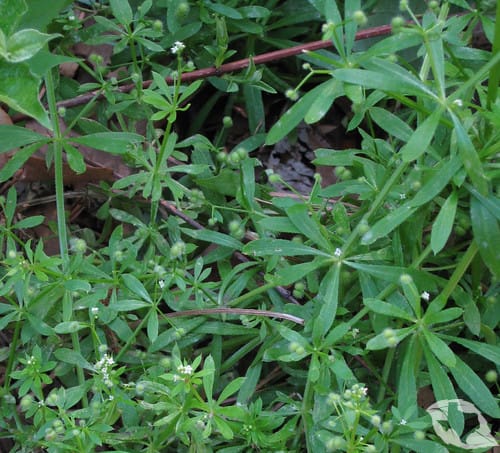
Fresh Cleaver tea!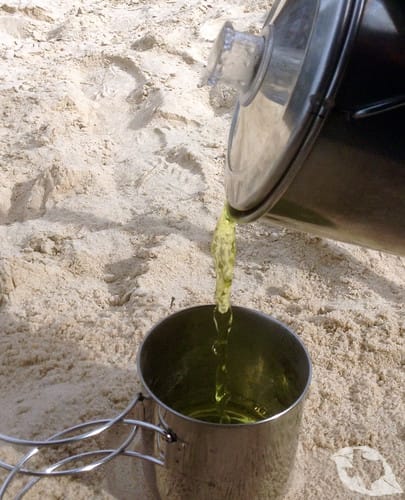
Distribution
North American distribution, attributed to U. S. Department of Agriculture.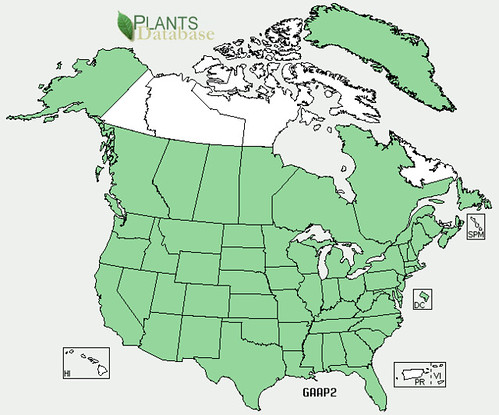
Texas distribution, attributed to U. S. Department of Agriculture. The marked counties are guidelines only. Plants may appear in other counties, especially if used in landscaping.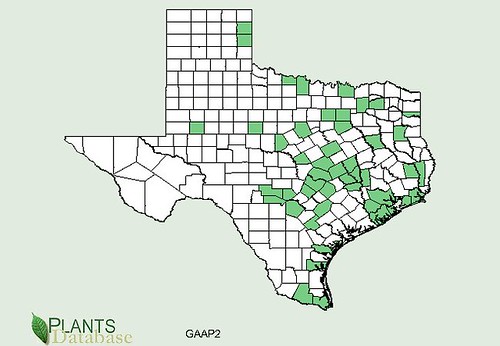
These common weeds pop up in late fall and by spring they form huge clumps of clingy, vine-like plants. In some circles cleaves are known as “backpacker colanders” as a large clump of them can be used as a field-expedient colander for straining pasta of rinsing berries.
Cleavers are covered with tiny, stiff hooks which allow them to cling to most fabric and pet hair, leading to their other common name Velcro Weed. The leaves of very young Cleavers are rounded but as the plant matures the leaves grow long and slender. Mature stems are square with noticeable groves. Seeds are small, round, and very clingy!
Cleavers are often used as a source of vitamin C in assorted bottled fruit juices and the same vitamin C benefits can be acquired from cleaver tea. Take fresh, green cleaver leaves and stems and chop them up before steeping in hot water for 10 minutes. The resulting tea will have a beautiful green color. Cleaver tea has a mild “green” taste which can be made more interesting by adding leaves, flowers, or bark of more flavorful plants.
Only the youngest, smallest Cleavers can be eaten raw and they can't have developed any of their “stickiness” yet otherwise they'll stick to your throat when you try to swallow them. When still tiny and unstick they taste like peas. Slightly older Cleavers, while still tender, make a good boiled greens addition to your meal. Be sure to drink or somehow use the resultant broth as it's rich in vitamin C. If after boiling 10 minutes the Cleaver stems are still stiff/woody the plant is too old to eat but the broth will still by good to drink.