Scientific name: Stellaria media and Cerastium vulgatum
Abundance: common
What: leaves, stems
How: raw or cooked
Where: sunny, shady disturbed areas
Nutritional Value: Rich in iron, potassium, other minerals, and vitamins A, D, B, C, and minerals
Dangers: Chickweed contain a small amount of saponins (soap-like) chemicals. Excessive quantities of it can cause an upset stomach.
Medicinal Summary
Leaves/Stems/Flowers – diuretic; reduces urinary tract pain and inflammations; gastrointestinal inflammations; soothes skin inflammations; soothes insect bites and stings (poultice, tincture, tisane)
Identifying Photos
Patch of chickweed growing against house foundation.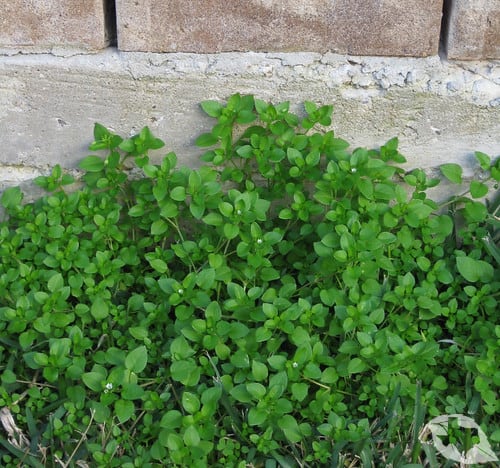
Chickweed flowers. Note the petals are deeply cleft, making one petal look like two.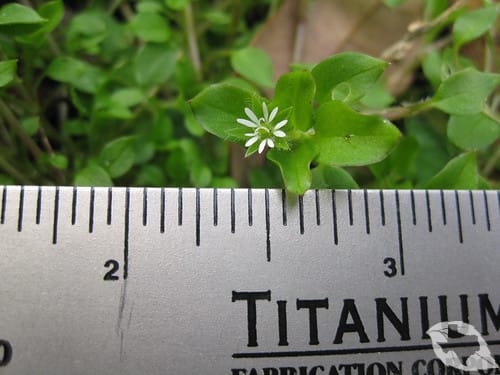
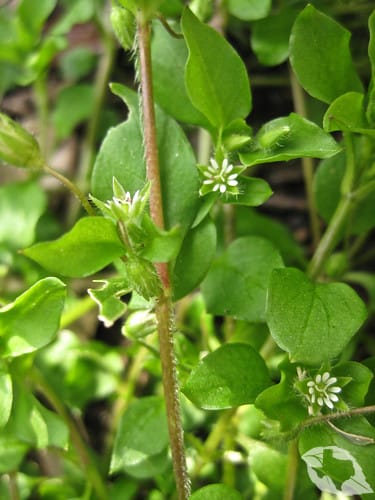
Close-up of chickweed leaf.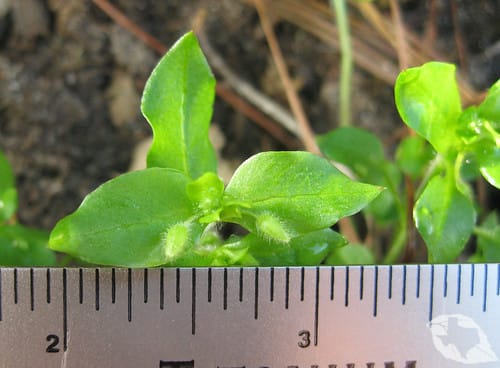
Chickweed going to seed.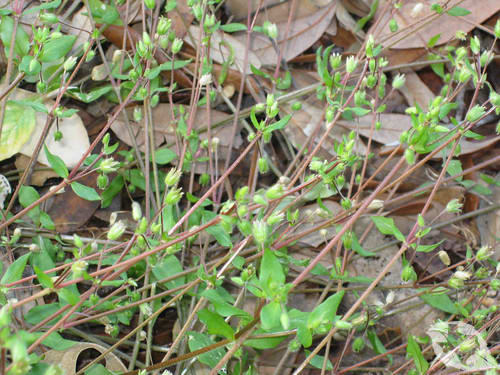
Mouse-Eared Chickweed.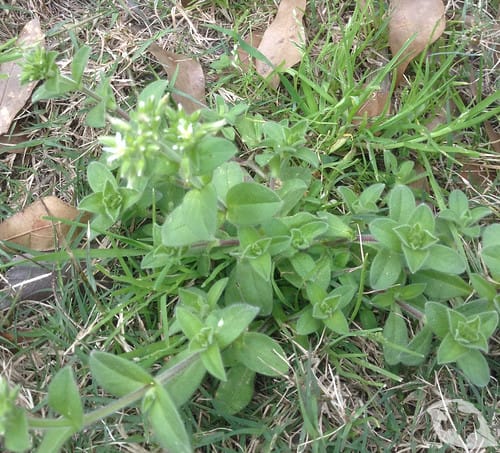
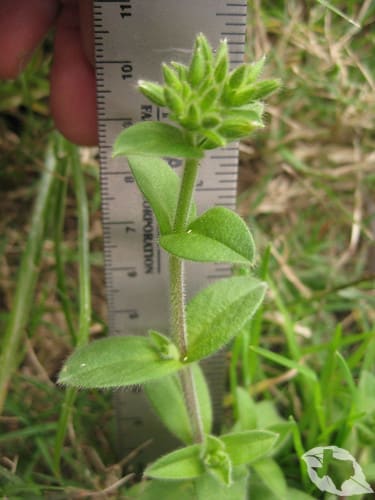
Close-up of Mouse-Eared Chickweed leaf.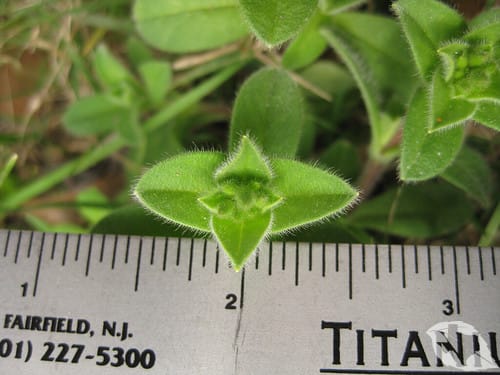
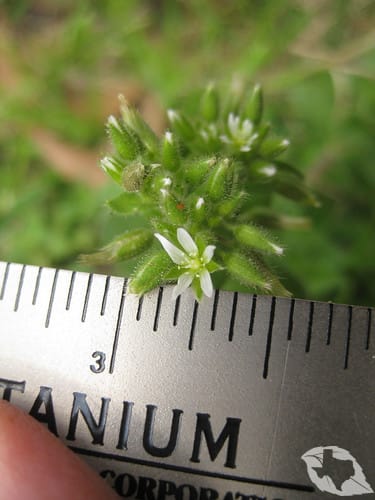
Close-up of Mouse-Eared Chickweed flower.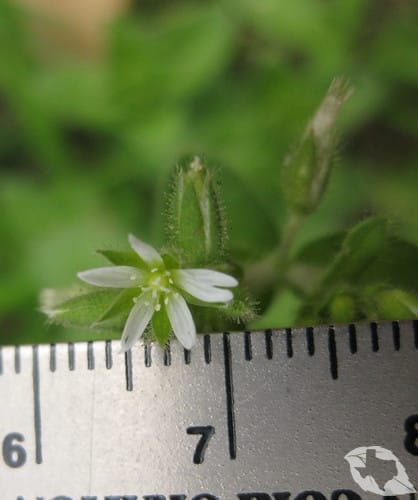
Distribution
North American distribution, attributed to U. S. Department of Agriculture.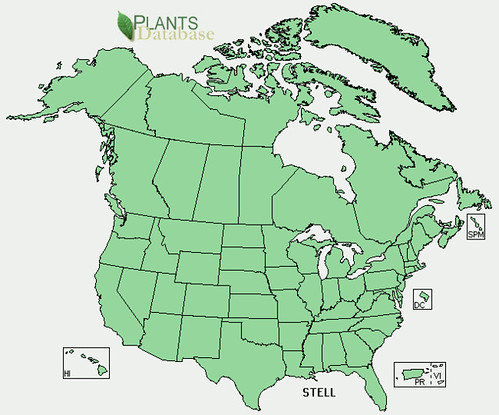
Chickweed makes its appearance in the winter and early spring of Texas lawns, often prefering to grow right up against the base of a house. Its sprouts were a common source of greens on early navy ships and helped prevent scurvy before the discovery of vitamin C. Their small amount of saponins help give dishes containing chickweed a creamy texture, especially when diced finely and simmered in pasta sauces. It's also tastes wonderful in pesto, salsas, and raw food/vegan “green drinks” as well as greatly increasing the nutritional value of these foods.
The hairy “Mouse-Eared Chickweed” Cerastium vulgatum must be cooked before eating to soften the hairs on the stems and leaves.