Scientific name: Tilia americana
Abundance: rare
What: flowers, leaves, buds, inner bark
How: leaves raw in salad, buds to nibble, flowers for tea, cambium (inner bark) raw or boiled for calories
Where: Sunny edges of woods
Nutritional Value: Leaves contain vitamins and minerals, inner bark has carbohydrates
Other uses: cordage from bark, not a good firewood
Identifying Photos
Basswood tree used in urban landscaping.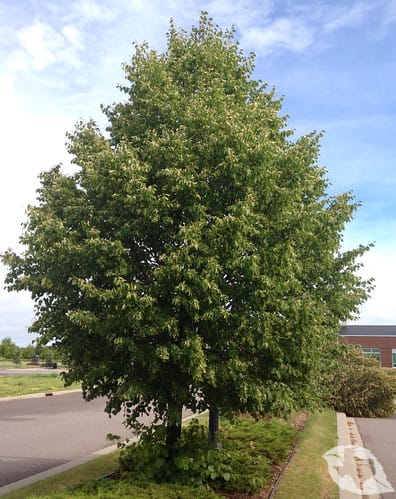
Basswood leaf and flower/nut bract (long, narrow leaf-like thing).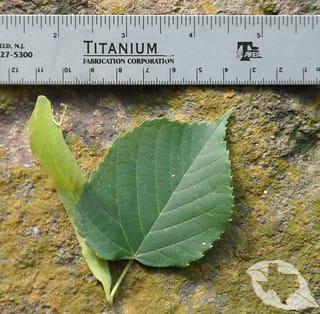
Basswood flower cluster and flower bract.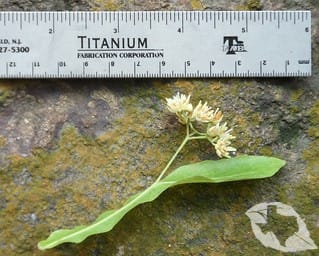
Close-up of Basswood flowers.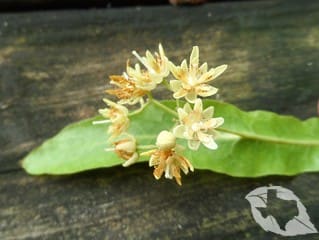
Basswood leaves and seedpods.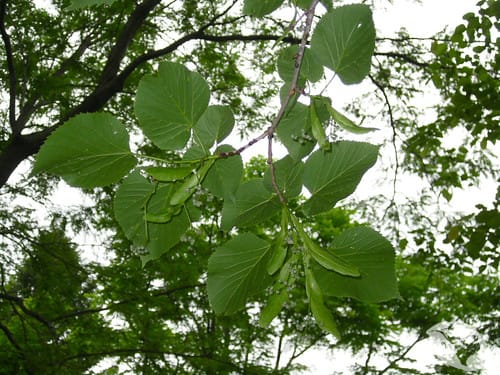
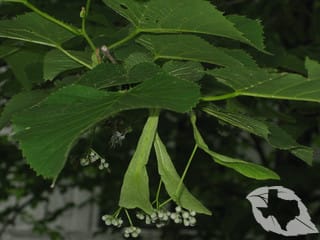
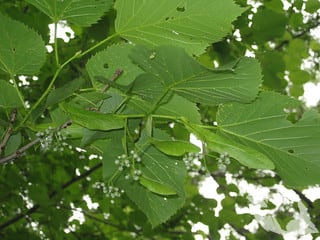
Basswood leaves.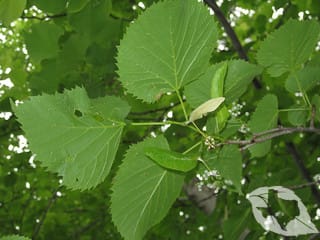
Almost-ripe Basswood nuts in the fall.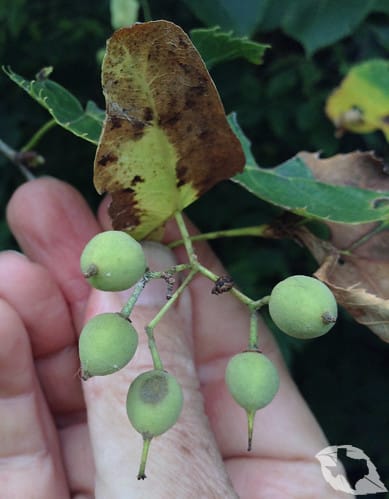
Ripe Basswood nuts.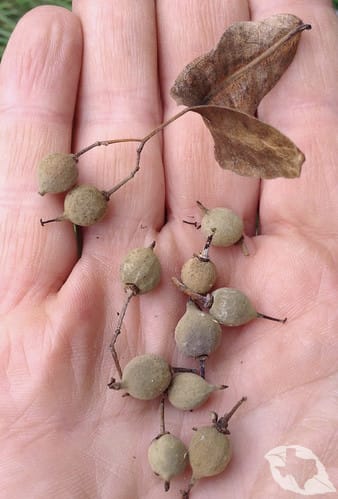
Basswood bark.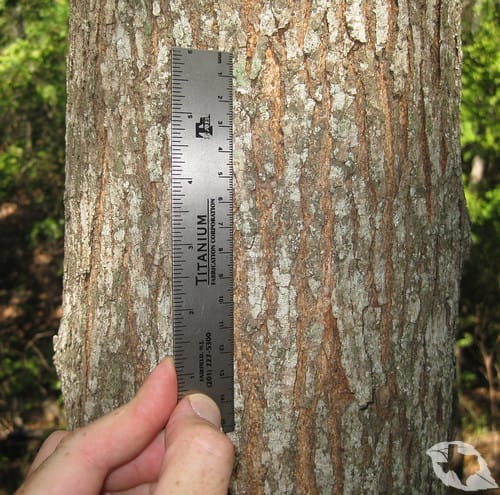
Distribution
North American distribution, attributed to U. S. Department of Agriculture.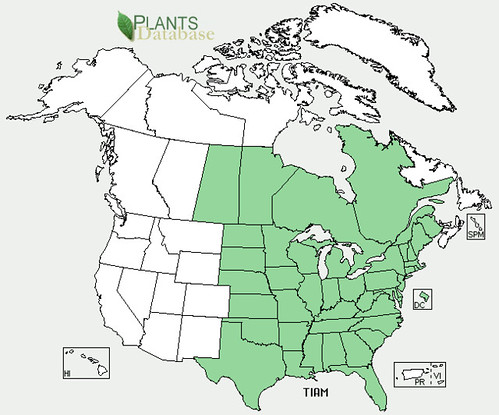
Texas distribution, attributed to U. S. Department of Agriculture. The marked counties are guidelines only. Plants may appear in other counties, especially if used in landscaping.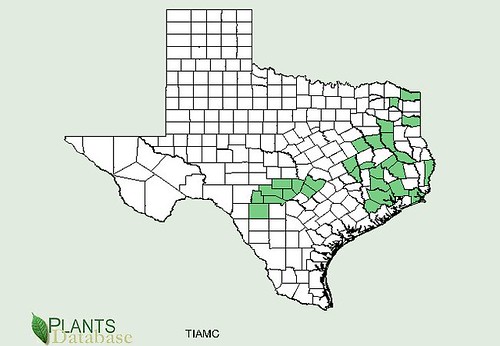
Stately basswood trees range from 60 to 120 feet tall with shallowly-furrowed, somewhat greyish bark and round crowns. There are thirty species in North America with Tilia Americana and Tilia caroliniana being the most common in Texas. Basswoods prefer loose, well-drained soil with access to moisture, in particular river flood-plains and in low areas of woods.
The sweet sap, running in the spring before the leaf buds open, can be boiled down into a syrup or just drank as-is. Be sure to sterilize your tools before using them to cut or drill into the tree to collect sap or inner bark. This reduces the chance of a fungal infection striking the basswood.
A very delicious, spicy tea is made from the small flowers of basswood trees, which appear in the spring. The flowers can also be eaten raw. Bees love these flowers and often the tree can be found just by listening for the buzz of the hundreds of bees collecting its nectar. The resulting honey has a flavor imparted from the basswood nectar.
The young leaf buds and leaves can be eaten raw and have a slightly sweet flavor similar to the flowers. These parts can also be cooked like pot-herbs.
In the fall the nuts make a good trailside nibble while hiking, but only eat the inner meat, not the nuts’ outer shells.
The calorie-rich cambium layer, just under the bark, is stripped, finely diced, and boiled into a porridge-like mush to eat any time of the year. In Europe towards the end of World War II basswood sawdust was added to bread to try and produce enough loaves to fill everyone’s belly.
This cambium layer can be used to make strong fibers that can be woven into rope, containers and crude cloth. This inner bark must be soaked for up to two weeks to rot away the majority of the plant’s cells, leaving behind just the fibers. The wood itself is great for carving and for making the body of guitars.