Scientific name: Viburnum dentatum
Abundance: uncommon
What: berries
How: raw
Where: sun, partial shade, woods, landscaping
Nutritional Value: flavanoids
Identifying Photos
Viburnum shrub in September with ripe berries.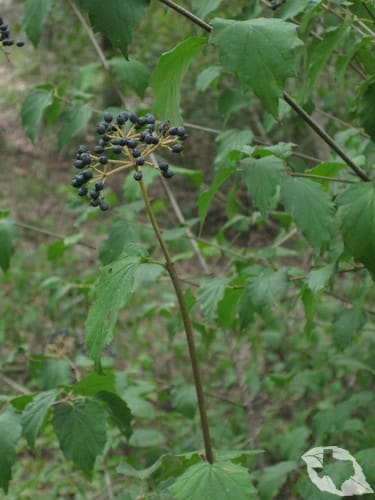
Closeup of ripe arrowwood berries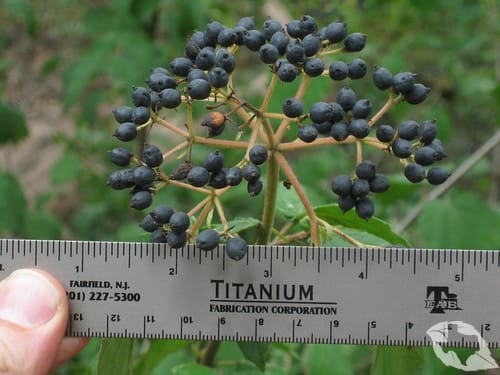
Closeup of arrowwood leaf. The teeth along its edge give it the name “dentatum”.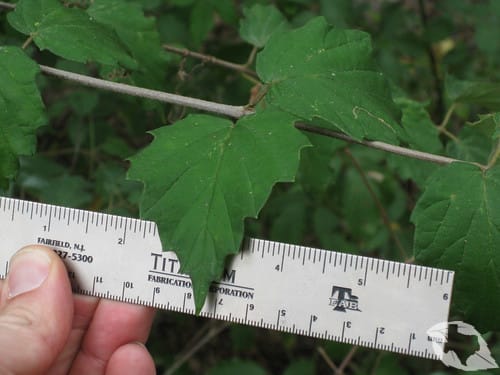
Closeup of flowers in early summer.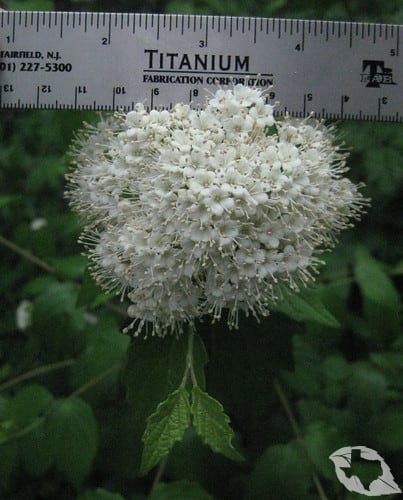
Distribution
North American distribution, attributed to U. S. Department of Agriculture.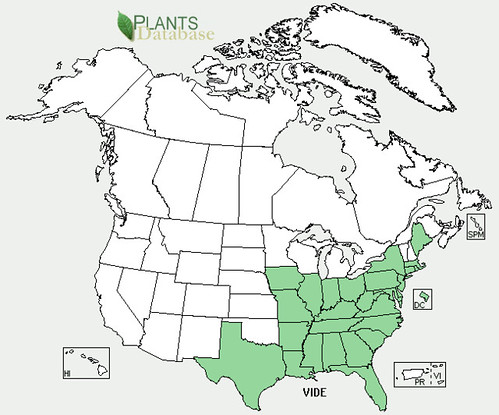
Texas distribution, attributed to U. S. Department of Agriculture. The marked counties are guidelines only. Plants may appear in other counties, especially if used in landscaping.
Arrow-wood shrubs are a common sight both in the woods and among landscaping. They grow 5’-9’ tall with multiple stems and thick foliage, ending up fairly round in shape. The inedible flowers appear in the spring and look almost identical to elderberry flow clusters. The long, straight, hardwood suckers were used to make arrows by Native Americans.
The dark blue-purple berries of arrow-wood are sour/sweet tasting but have only a thin layer of edible flesh over a large, inedible seed. They taste best as soon as they ripen, making an excellent nibble while hiking in the early fall. There is record of making jelly from the berries but I have not tried this personally. As the arrow-wood berries age they lose a lot of their flavor, becoming dry and mealy.