Scientific name: Achillea millefolium
Abundance: uncommon
What: flowers, leaves, roots
How: flower/leaves-tea, young leaves-salad greens
Where: sunny fields, landscaping, yards
When: summer
Nutritional Value: low
Other uses: used in the past to treat cuts and wounds.
Dangers: may cause allergic reaction in some people
Medicinal Summary
Flowers/Leaves/Roots – hemostatic; anti-diarrheal; thermoregulator/fever reducer; wound healer; antibacterial; heals bruises, sprains, and strains; reduces swelling; reduces urinary tract problems; expectorant (poultice, tisane, tincture)
Identifying Photos
Yarrow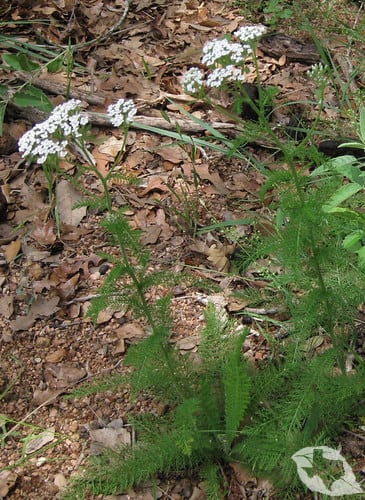
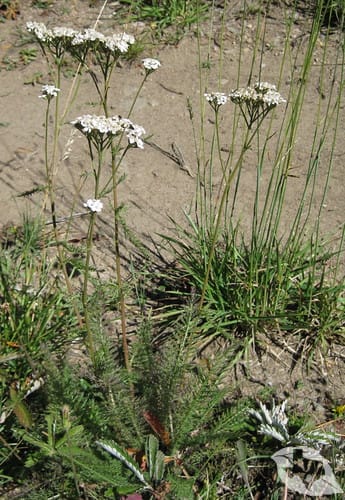
Yarrow flowers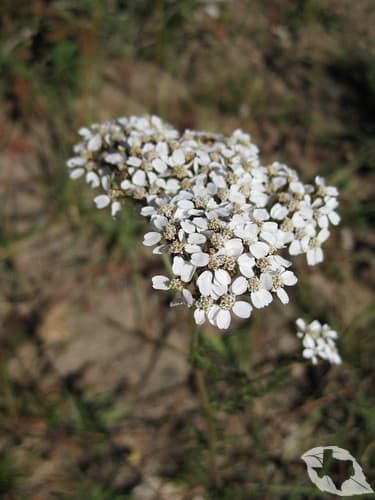
Yarrow stem and leaves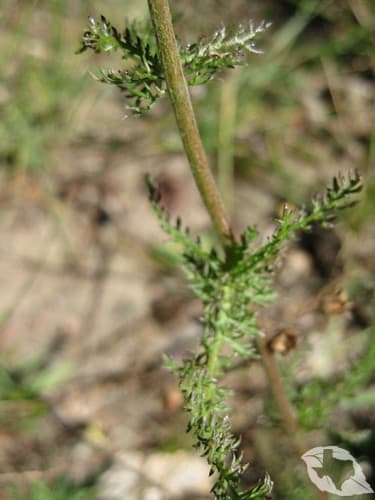
Young yarrow plants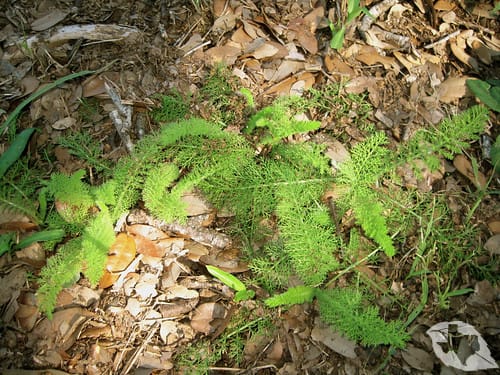
Extreme close-up of yarrow leaves.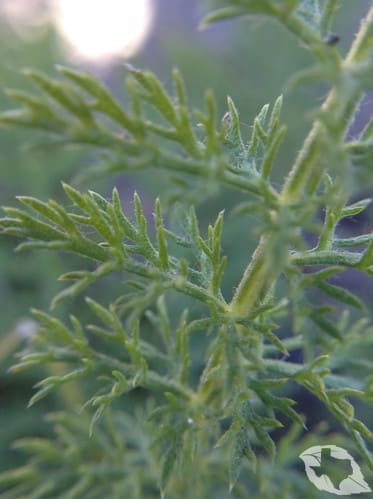
Distribution
North American distribution, attributed to U. S. Department of Agriculture.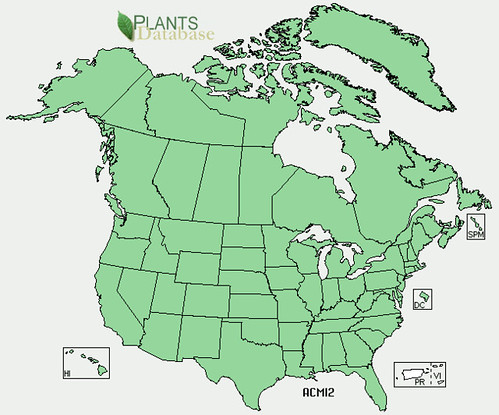
Texas distribution, attributed to U. S. Department of Agriculture. The marked counties are guidelines only. Plants may appear in other counties, especially if used in landscaping.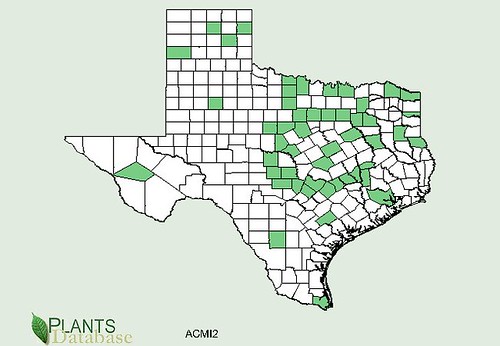
Look for yard along the edges of woods just inside the shady areas as well as in fields, especial across Central Texas. The finely divided leaves, from which it gets part of its scientific name "millefolium" give it a wild carrot-like appearance but it is a much shorter plant, rarely reaching three feet in height.
It's main use is medicinal rather than as a food source. Tea from its flowers and leaves helps produce productive sweating to flush toxins from the body and skin as well as to help fight infections. The leaves are a potent blood clotter used to staunch bleeding from even severe wounds. They were a part of Roman soldiers' "first aid kits" and worked surprisingly well.
There is some record of the dried flowers and leaves being smoked for respiratory medicinal properties.