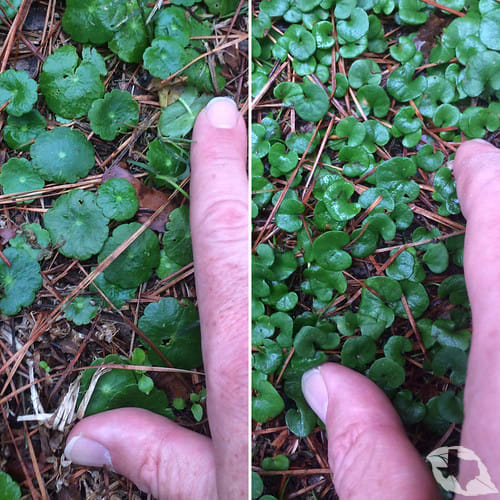
Scientific name: Hydrocotyle spp.
Abundance: plentiful
What: leaves, stems
How: raw
Where: yards, marshes, water
Nutritional Value: some minerals
Dangers: Thoroughly wash plants collected from water to remove any harmful bacteria.
Identifying Photos
Dollarweeds around a tree.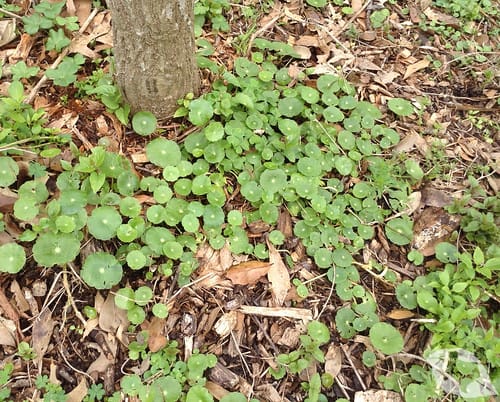
A yard taken over by dollarweeds.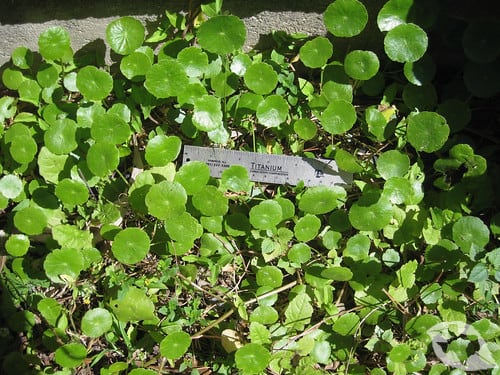
Dollarweeds in the woods.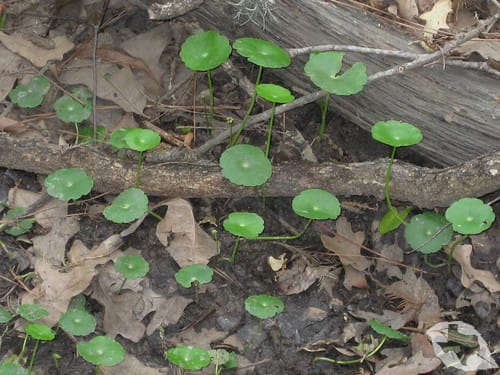
Dollarweeds along the shore of a pond.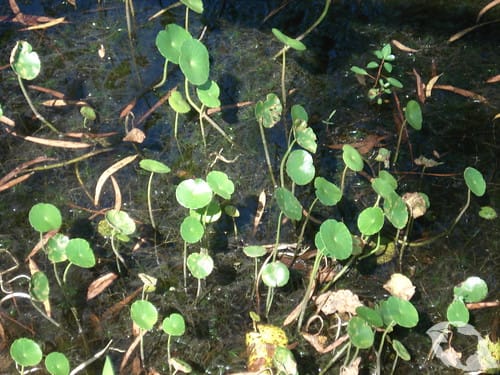
Distribution
North American distribution, attributed to U. S. Department of Agriculture.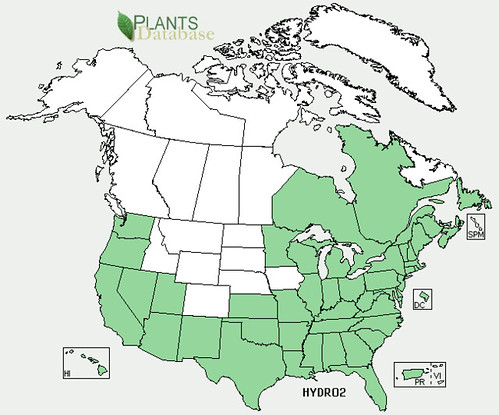
Texas distribution, attributed to U. S. Department of Agriculture. The marked counties are guidelines only. Plants may appear in other counties, especially if used in landscaping.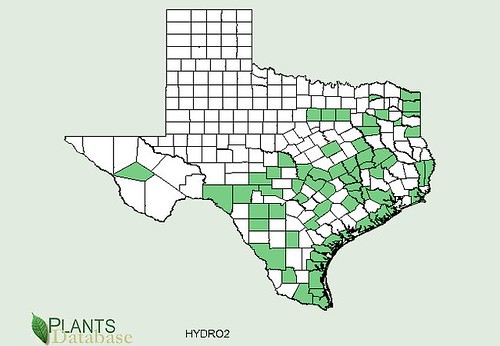
Dollarweed is a common yard weed that drives many people nuts. The single, round leaf with a centered stem seems to explore across otherwise perfect lawns. Mowing them down or picking them leaves the roots behind which will quickly produce a new crop of green disks. These weeds vex homeowners in all but the very hottest and coldest times of the year, becoming most prevalent in the spring and fall.
Dollarweeds the size of quarters or smaller and my favorites, tasting somewhat like cucumber peels. I prefer the younger, more tender, nickel-sized “circles” over larger ones. The larger ones have a dry, slightly bitter/chalky taste. Luckily, Dollarweeds of all sizes can be fermented like cabbage to make “dollarweed-kraut” or a yard-based version of kimchee. Just pick the circles, leave the stingy, tough stems behind.
Mimics
Some people get confused between dollarweed and pony’s foot (Dichondra carolinensis). The leaf of dollarweed is a complete circle whereas pony’s foot is cleft, giving it the shape of a horse’s hoof.
Dollarweed on left, edible Pony’s Foot on right.