Scientific name: Rumex crispus
Abundance: plentiful
What: very young leaves, seeds
How: leaves may be eaten raw; roast seeds or grind seeds into flour
Where: fields, disturbed areas, stream and pond banks
Nutritional Value: leaves are high in vitamin A&C, minerals, protein; roots high in iron and other minerals
Dangers: contains small amounts of oxalic acid, limit intake to what you’d normally eat of spinach
Medicinal Summary
Root* – laxative; appetite stimulant; antibiotic, antifungal; antidiabetic type II (poultice, tisane, tincture)
*root must be allowed to dry 8 months to 1 year for medicinal properties to develop
Identifying Photos
Young leaves are edible raw at this point.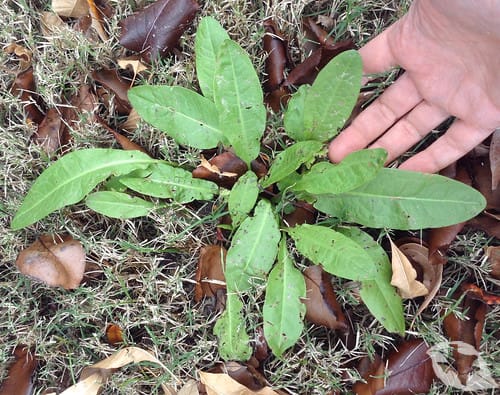
Remove the ribs from ones this age before eating the leaves raw.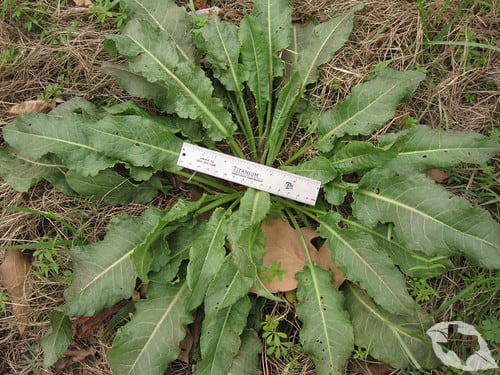
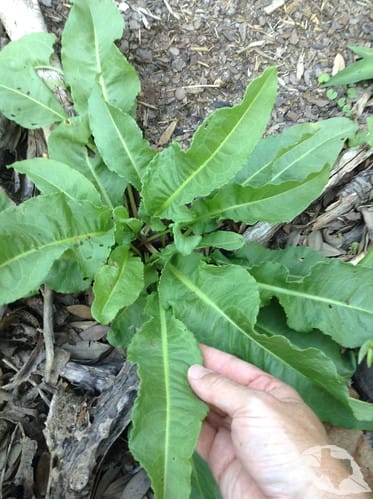
Probably need boiling now.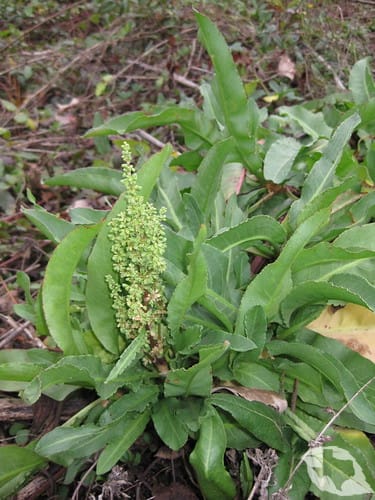
Dock plant.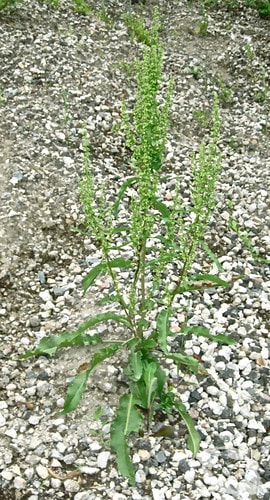
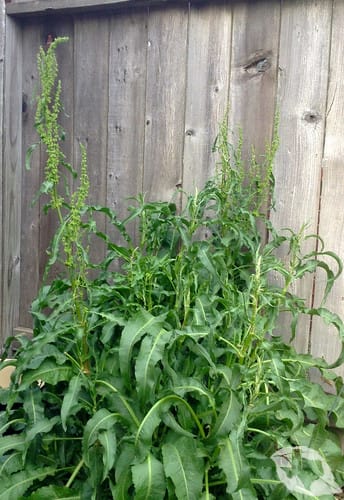
Curled Dock root.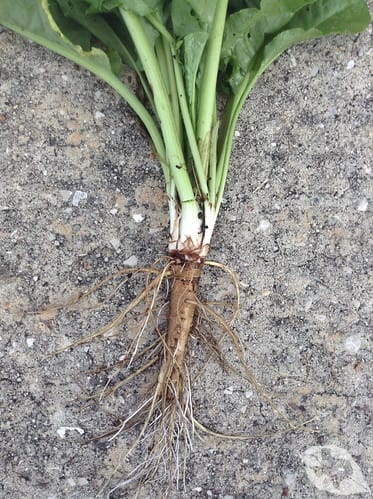
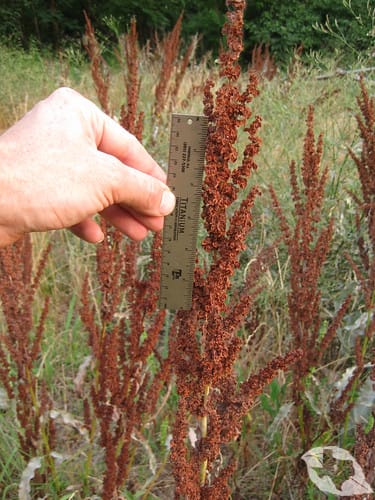
Mature curled dock seedheads (early summer) have a distant “rust” color.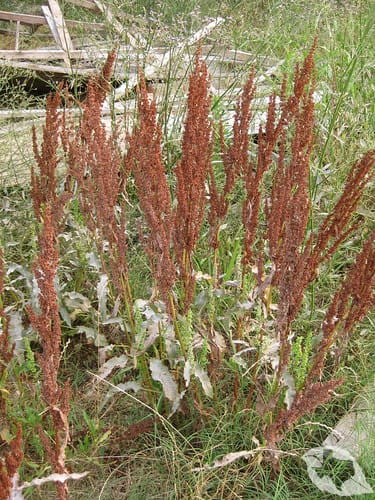

Close-up of curled dock seeds.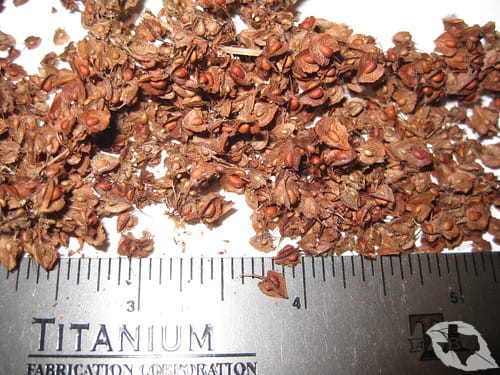
Distribution
North American distribution, attributed to U. S. Department of Agriculture.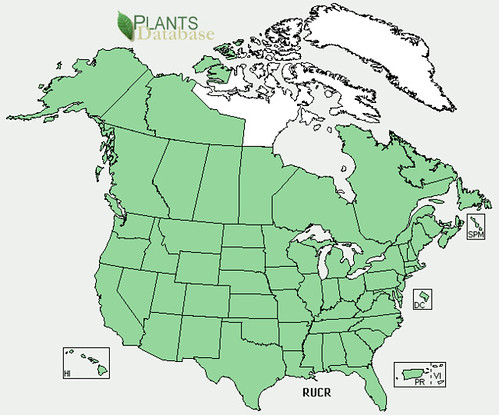
Texas distribution, attributed to U. S. Department of Agriculture. The marked counties are guidelines only. Plants may appear in other counties, especially if used in landscaping.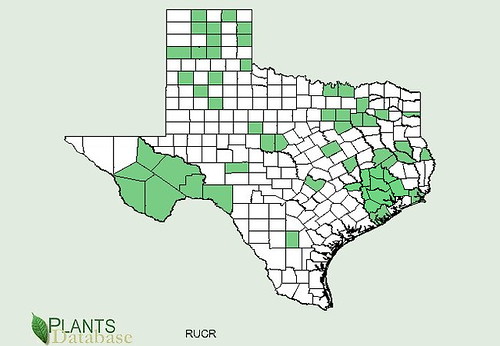
Dock is a rich source of vitamins and minerals and the leaves, though tangy in flavor, taste mild enough to eat young leaves raw up until the flower spikes appear. After that but it can become tough and somewhat bland. Steaming, boiling or sautéing improves the texture of large, mature leaves. Mix it with milder greens to cut the flavor more. My Polish friend raves about creamy dock soup from the old country. Her version takes a lot of work, mine involves just dicing up young dock leaves (about 1/2 cup) and tossing them in a can of cream of mushroom soup. Add crumbed bacon and diced potatoes to really jazz it up!
The papery sheath holding the seeds is hard to remove so it is usually just left on the seeds, though be warned consuming large quantities of the sheath fiber will do wonders (not all good) to you digestive output. Imagine eating a really, really big bran muffin…topped with Ex-Lax. To remove this outer shell, toast the seeds to make the shell brittle, then “grind” them between the palms of your hands to shatter the shell off the seeds. Take this shell/seed mixture and go outside during a light wind and pour the mix back and forth between two bowls, allowing the wind to blow away the lighter shell material. This is called winnowing.
The seeds can be roasted then eaten as a snack or ground into flour, boiled into porridge, added to bread, etc… Really, their use is limited only by your imagination! My favorite way is to mix them with cream cheese and slap it on a Ritz-style cracker. They add a nutty, quinoa type flavor to soups and stews.
Tea made from dried roots of curled dock has been used medicinally as an anti-cancer agent though little research supports this use. Mashed-up fresh roots were used to treat minor skin issues such as scraps, rashes, and abrasions. I personally use a vodka-based tincture of chopped curled dock root as a “bitters” for mixed drinks. Woo hoo!